Sound Baths in 2026: Are They Actually Worth It or Just a Wellness Trend?
Sound baths went from a niche yoga-studio add-on to a headline wellness story this year. The Atlanta Journal-Constitution named them one of 2026’s biggest wellness trends, and they’re now showing up in corporate offices, performing arts centers, and church basements, not just incense-heavy studios.
That kind of mainstream jump is exactly when a practice either gets a real evidence base or gets buried under wellness marketing that outruns the research. Sound baths have some of both, and this piece separates them.
Short version: there’s real, peer-reviewed research showing sound baths do something measurable, not just “nice to lie down for an hour.” There’s also a lot of overstated framing about brainwave entrainment and cellular healing that the actual studies don’t support. Both things are true at once.
What Is a Sound Bath, Actually?
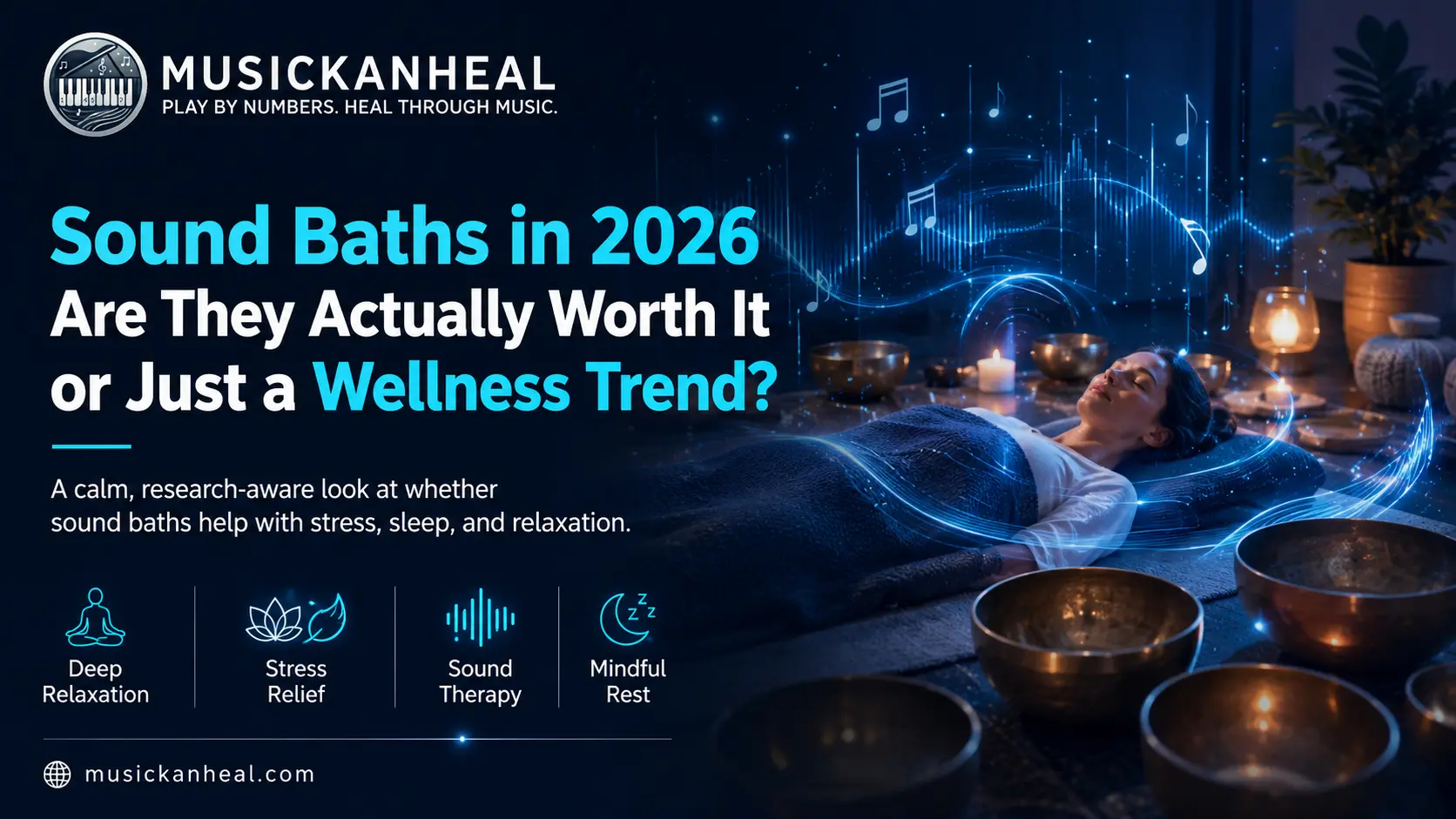
A sound bath is a guided listening session where you lie down, usually on a mat with a blanket, while a practitioner plays instruments like crystal or Tibetan singing bowls, gongs, chimes, and tuning forks. There’s no water involved. The “bath” refers to sound washing over you rather than a melody you’re meant to follow.
Unlike a concert, there’s no performance to watch and nothing you’re supposed to do. You close your eyes, let the sound happen, and the session runs anywhere from 30 to 90 minutes depending on the venue.
As the Atlanta Journal-Constitution reported this spring, sound baths have moved well past yoga studios into corporate conference rooms, wellness retreats, and performing arts centers, part of what’s driving the format’s 2026 breakout.
Why Sound Baths Are Suddenly Everywhere in 2026
Part of the appeal is accessibility. The format requires no flexibility, no prior meditation practice, and no active participation, which makes it an easier entry point than yoga or seated mindfulness for people who find those intimidating or physically difficult.
Part of it is also just timing. Stress and sleep complaints haven’t gone anywhere, and a session that asks nothing of you except showing up and lying down is a low-effort sell in a culture that’s tired of wellness practices demanding more discipline, more subscriptions, or more gear.
There’s a business-model reason it’s spreading fast too: a facilitator and a set of bowls can serve a room of 30 people at once, which makes the format cheap to run compared to one-on-one massage or private coaching. Corporate wellness budgets have noticed, and that’s part of why the practice is showing up in office conference rooms now, not just studios.
None of that tells you whether the practice actually does anything beyond feeling pleasant, which is the part worth digging into before you book a session or a series.
What the Research Actually Shows (Not Just Anecdotes)
The most cited study behind sound bath claims is a 2016 observational study out of UC San Diego, in which 62 participants reported significantly less tension, anger, fatigue, and depressed mood immediately after a Tibetan singing bowl session, along with a measurable increase in spiritual well-being. The full study is available through PMC if you want the actual data rather than a summary.
That’s a real result, and it’s worth taking seriously. It’s also an observational study with no control group, which means there’s no way to separate “the sound did this” from “lying down quietly for an hour with your eyes closed did this.” Most articles citing this study skip that caveat entirely.
The sample also skewed toward people already curious enough to attend a sound meditation session, which is a real limitation for how far the findings generalize to someone who’s never tried anything like it.
The Study That Actually Answers “Is It Just Relaxing?” Question
A 2023 randomized controlled trial addresses that gap directly. Researchers in Chile compared Tibetan singing bowl sessions against progressive muscle relaxation and a waitlist control group in 50 adults with elevated anxiety, measuring heart rate variability and EEG activity at multiple points during a single session. The singing bowl group showed significantly greater improvements in heart rate variability and self-reported anxiety than either the relaxation exercise group or the group that did nothing.
One randomized trial with 50 people is not the same as a large, replicated body of evidence. But it’s a meaningfully stronger data point than the observational study alone, and most content covering this topic online doesn’t mention it exists.
The Skeptic’s Case: What Sound Baths Don’t Prove
Dr. David Silbersweig, a Harvard psychiatrist, told AARP that while sound therapeutically can increase relaxation and reduce anxiety in the moment, treating that as evidence sound baths help with anxiety disorders or major depression is a much bigger claim than the current research supports. He also raised a fair methodological point: a lot of existing sound healing research comes from researchers already inclined to believe in it, which raises real questions about how objectively those studies were designed and interpreted.
There’s also a specific claim worth pushing back on directly: that sound baths work by “entraining” your brainwaves into theta or delta states. Real entrainment happens with binaural beats, where two slightly different tones create a perceived low-frequency beat that can match an actual brainwave range. A gong or singing bowl produces a complex, audible tone that isn’t operating through that same mechanism, even though wellness marketing borrows the word freely.
If you want the more technical version of that distinction, this comparison of binaural beats versus solfeggio frequencies breaks down which frequency-based claims have a plausible mechanism behind them and which are borrowing the term loosely. The same honest-science approach applies to frequency-specific claims made about 528 Hz, which face a nearly identical gap between what’s measured and what’s marketed.
What to Expect at Your First Sound Bath
If the research has you curious enough to try one, here’s what a typical first session actually involves:
Comfort Is the Whole Setup
Wear comfortable clothing and bring a mat, blanket, or eye mask if the venue doesn’t provide one. You’ll be lying down for the full session, and body temperature tends to drop during deep relaxation.
Phone Off, Not Just Silent
A single buzz can pull you out of a session that took 20 minutes to sink into, for you and the people around you.
Falling Asleep Is Normal, Not a Failure
Some facilitators consider it a sign the session is working, since your body chooses rest when it feels safe enough to let go.
An Emotional Reaction, or None, Are Both Normal
Some people cry or feel unexpectedly emotional; plenty of others just feel pleasantly relaxed. Neither is the “correct” outcome.
Disclose Health Conditions Beforehand
Sound therapy is generally low-risk, but people with epilepsy, cardiac arrhythmia, or implanted medical devices should check with a doctor first, per UCLA Health’s guidance on the practice.
Is a Sound Bath Worth It? Who It’s Actually Good For
If you want a low-effort way to interrupt a stressful day or an entry point into meditation that doesn’t require sitting still and watching your breath, the evidence reasonably supports trying one. The RCT evidence in particular suggests you’re likely getting something beyond “I lay down for an hour and felt better.”
If you’re looking for a substitute for treating a diagnosed anxiety disorder or depression, that’s a different claim the research doesn’t back. It’s a complementary relaxation tool, not a replacement for therapy or medication when those are what’s actually needed.
Frequency matters too. A single session is enough to notice the relaxation response the studies measured, but the practitioners quoted in the AJC piece describe compounding benefits from regular attendance, which lines up with how most relaxation-based interventions tend to work: the effect is real per session, and consistency is what makes it add up to something more than a nice hour.
If a full studio session isn’t accessible or affordable regularly, MusicKanHeal’s healing audio library offers guided sound and frequency-based tracks you can use at home between sessions or as a starting point before committing to an in-person series.
The Bottom Line
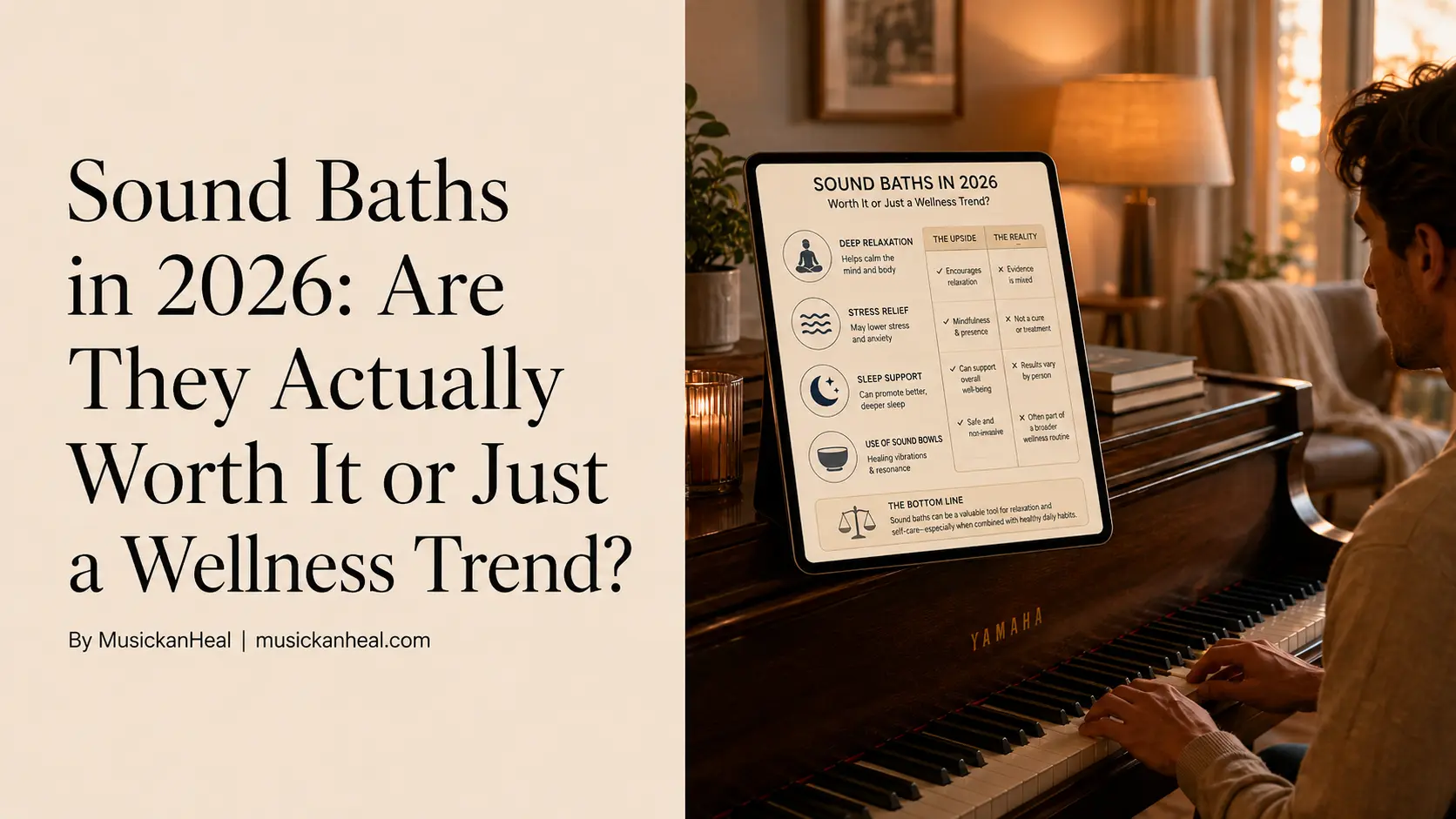
Sound baths aren’t pure placebo, and they aren’t a scientifically validated treatment either. The honest middle is that a growing, still-small body of research, including one actual randomized controlled trial, supports the practice as a genuine relaxation tool that does something beyond simply resting quietly. The marketing built on top of that evidence, brainwave entrainment claims, and cellular healing language, especially, outruns what the studies actually show.
Frequently Asked Questions About Sound Baths
Are sound baths actually backed by science, or is it just relaxation?
Both, to different degrees. An observational study found real improvements in mood and tension after a single sound bath, but without a control group. A 2023 randomized controlled trial found singing bowl sessions outperformed both progressive muscle relaxation and a waitlist control on heart rate variability and anxiety, which is stronger evidence that the sound itself, not just quiet rest, is doing something.
What should I expect at my first sound bath?
You’ll lie down on a mat or blanket, usually in a dimly lit room, while a practitioner plays instruments like singing bowls, gongs, or chimes for 30 to 90 minutes. There’s nothing you need to do beyond getting comfortable and closing your eyes; the session is designed to be entirely passive.
Is it normal to fall asleep during a sound bath?
Yes, and most facilitators consider it a normal, even welcome, response. Falling asleep suggests your nervous system felt safe enough to fully let go, which is generally the goal of the session rather than something to fight against.
Are sound baths safe for everyone?
Sound baths are considered low-risk for most people, but anyone with epilepsy, cardiac arrhythmia, or an implanted medical device should check with a doctor first, since certain frequencies and volumes could theoretically be a concern. Pregnant people and those with sound sensitivities are generally fine but should mention it to the facilitator beforehand.
How much do sound baths typically cost?
Group sessions usually run $15 to $65 depending on the city and venue, while private one-on-one sessions cost more. Many yoga studios and wellness centers also include sound baths as part of a membership, which is often the more affordable way to try one regularly.
All rights are reserved. Copyright 2026 MusicKanHeal | musickanheal.com