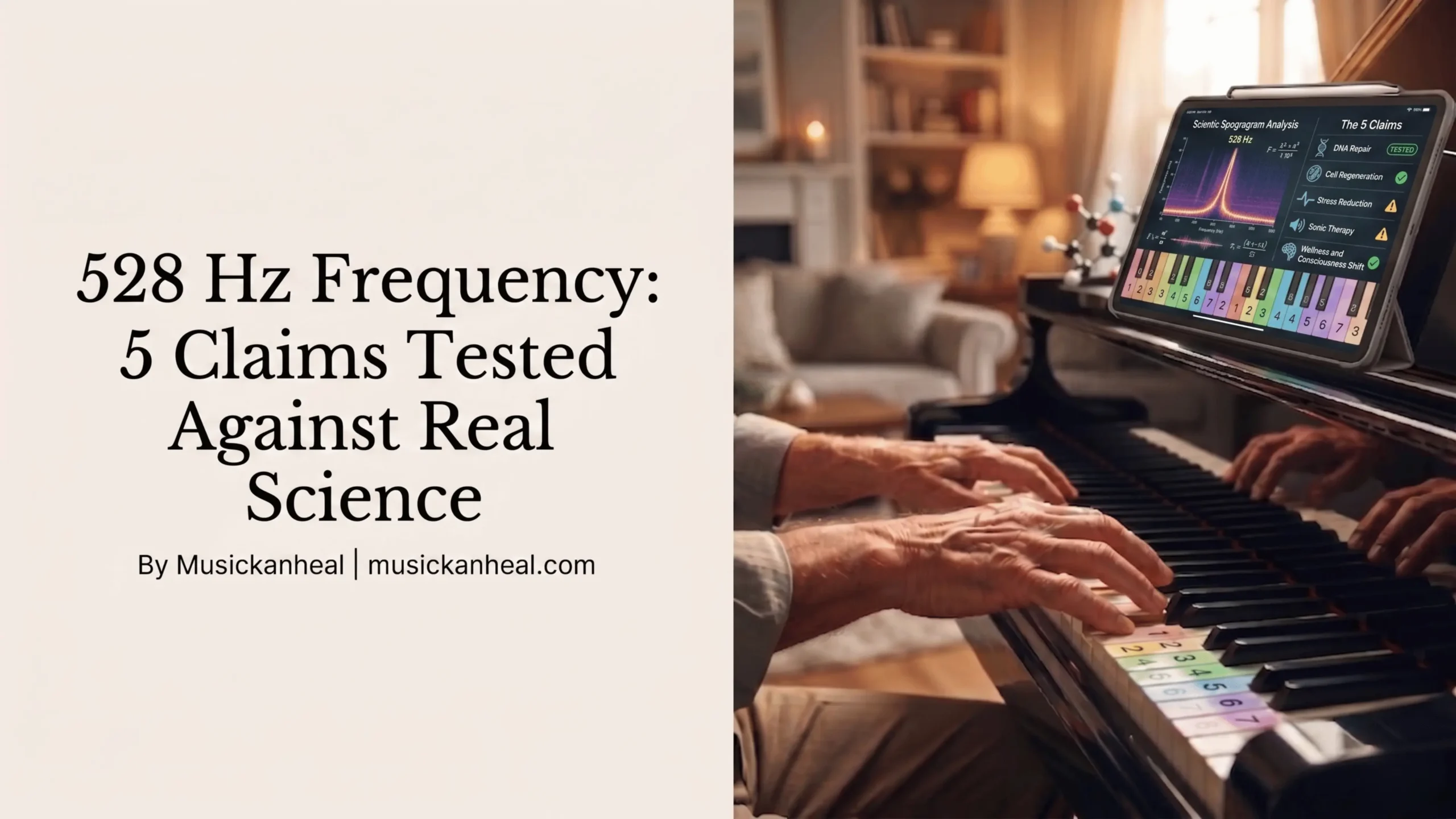
528 Hz Frequency: 5 Claims Tested Against Real Science
Type “528 Hz” into YouTube and you’ll find tens of millions of views. Titles promise DNA repair, anxiety elimination, cellular regeneration, and spiritual transformation — all from a single sound. Some videos have accumulated more listens than most mainstream albums.
The 528 Hz frequency has become one of the most searched terms in the wellness space. And the claims around it are significant enough that they deserve a straight answer: What does this frequency actually do? What does the science support? And where does it start drifting into something that no study can back?
This article doesn’t dismiss 528 Hz. There is genuine research worth taking seriously. But there’s also a substantial gap between the evidence that exists and the promises that circulate online — and that gap matters to anyone using sound tools for real mental health or stress support.
What Is the 528 Hz Frequency? The Basics Without the Hype
A hertz (Hz) is a unit of frequency — it measures how many vibrations or cycles occur per second. Sound is, at its most basic level, pressure waves moving through air. Different frequencies produce different pitches, and 528 Hz sits in a mid-range tone, roughly corresponding to a C note.
In the standard Western tuning system, the note A4 is set at 440 Hz, and all other notes are derived from that anchor. A piece of music “tuned to 528 Hz” means the entire piece has been shifted so that the musical equivalent of the C note vibrates at 528 Hz instead of its standard position within the 440 Hz tuning system.
On its own, that’s an unremarkable technical distinction. What makes 528 Hz stand apart from any other frequency is the claim attached to it: that this particular vibration has unique healing properties that standard music tuning lacks. That claim has a specific origin, and understanding it is the most useful thing you can do before deciding what 528 Hz means to you.
Where Did the 528 Hz Healing Claims Actually Come From?
The 528 Hz story begins not in an ancient monastery, but in the mid-1970s, when a physician named Dr. Joseph Puleo reportedly received what he described as a divine vision prompting him to search the Old Testament’s Book of Numbers for hidden numerical patterns.
Using a numerological technique called Pythagorean reduction (adding the digits of a number until you get a single digit), Puleo identified six frequencies — 396, 417, 528, 639, 741, and 852 Hz — and concluded these were the original “Solfeggio frequencies” used in Gregorian chants for sacred healing. There is no historical or musicological documentation supporting this connection. These numbers don’t appear in the medieval chants they’re attributed to.
In the 1990s, Dr. Leonard Horowitz — a former dentist and alternative health writer — picked up Puleo’s work and took it considerably further. Horowitz declared 528 Hz the “frequency of love,” arguing in his 1999 book that this frequency could heal damaged DNA, promote spiritual transformation, and even align with the mathematical structure of the universe. Horowitz’s framing drew heavily from numerology, biblical interpretation, and speculative physics rather than clinical research.
This is the foundation on which the entire 528 Hz ecosystem was built — a 1970s numerological reading of Bible verses, expanded in the 1990s by an alternative medicine writer. That context doesn’t automatically make the frequency useless, but it does mean the “ancient sacred knowledge” framing is fabricated. The frequency is not ancient. The claim is not scientific. The beneficial effects, if any, need to stand on evidence that is entirely separate from the origin story.
If you want to understand how different frequencies compare and what the actual research says about solfeggio frequencies broadly, this article on binaural beats vs solfeggio frequencies gets into the specifics.
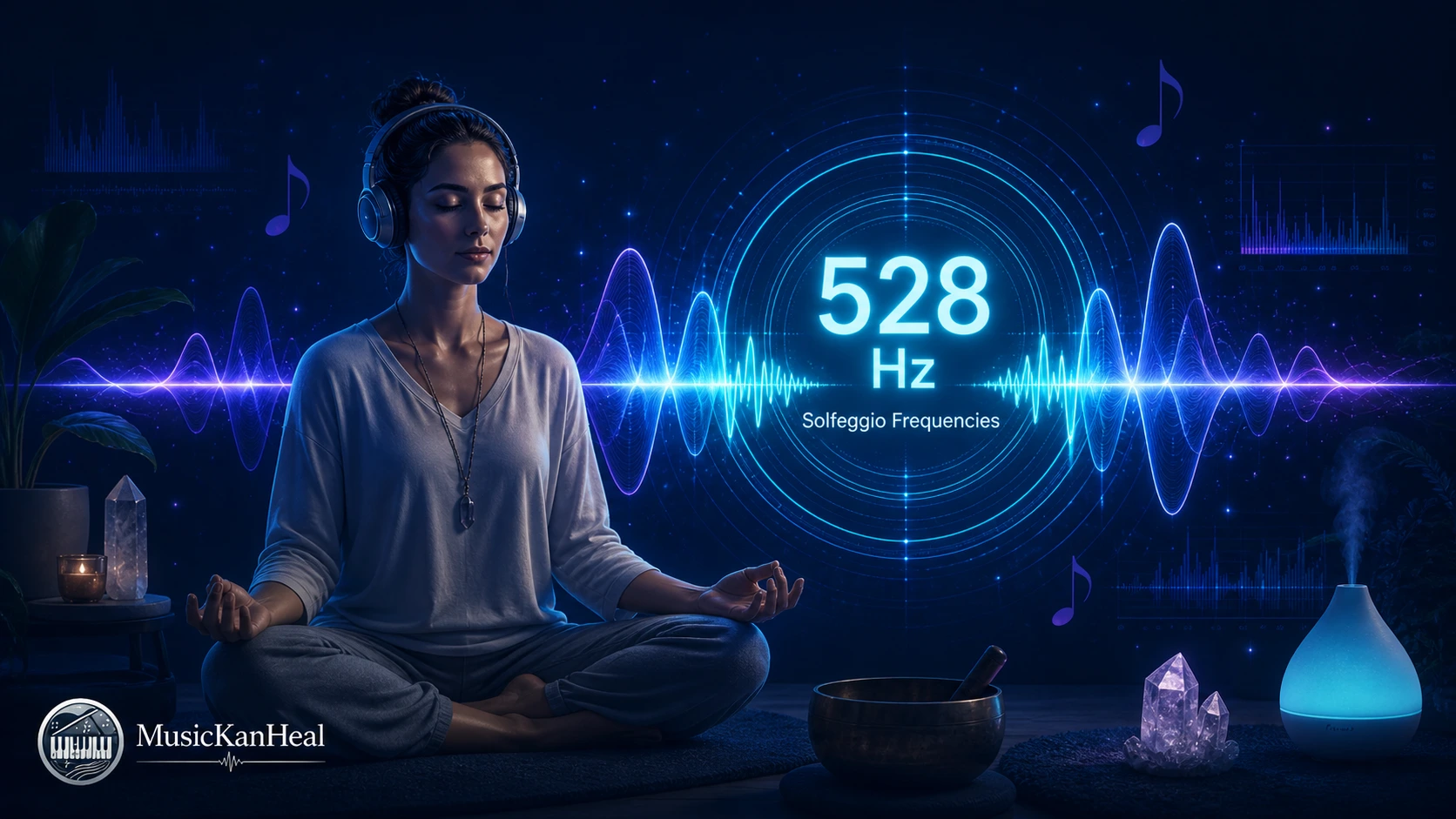
What Does the Science on 528 Hz Frequency Actually Show?
The honest summary is this: there is real research on 528 Hz, the findings are modest and preliminary, and they don’t support the miracle claims.
- The Akimoto 2018 study — the most cited piece of research. A peer-reviewed study published in the Journal of Health Science by researchers at Juntendo University measured the physiological and psychological effects of five minutes of 528 Hz music on nine participants. Compared to listening to the same music at standard 440 Hz tuning, 528 Hz produced measurably lower salivary cortisol levels and higher oxytocin levels. Mood disturbance and anxiety scores also improved more in the 528 Hz condition. The findings are real. They are also from a study of nine people. That sample size cannot support broad clinical conclusions.
- The cell culture study. A separate study found that human astrocyte cells exposed to 528 Hz sound waves showed increased viability and reduced oxidative stress markers compared to control conditions. That’s a cell culture result, not a human study. Cell culture findings often don’t translate to living bodies in the same way — biological systems are considerably more complex.
- The rat study. A 2018 study found that rats exposed to 528 Hz sound waves at 100 dB showed increased testosterone production in brain tissue and reduced reactive oxygen species. Anxiety-related behaviors decreased. This is worth noting, but rat studies and human outcomes diverge frequently enough that this remains far from confirmatory.
- What the skeptics point out. Systematic reviews of medical databases find no rigorously controlled, reproducible studies showing that 528 Hz repairs DNA in living cells or organisms. Critics note that sound waves are pressure waves — they’re absorbed by human tissue before reaching individual cells, let alone DNA within those cells. The physics of claiming that a specific audio frequency directly modifies DNA is, at minimum, unsupported.
The most accurate statement is this: 528 Hz has measurable effects on cortisol and oxytocin at least in small, short-term studies. The miracle framing overstates this dramatically. Dismissing it entirely undersells what limited evidence there is.
Can 528 Hz Frequency Repair Your DNA? The Honest Answer
No. Not in any way the available evidence supports.
The DNA repair claim is the most viral and least defensible part of the 528 Hz conversation. It traces back to a 1988 experiment by biochemist Dr. Glen Rein, who exposed DNA vials to different kinds of music and measured UV light absorption. Gregorian chants showed a different absorption pattern than rock music. That result was amplified into “528 Hz repairs DNA” through a chain of creative interpretation that the original research doesn’t support.
Here’s the specific problem with the DNA claim: sound is a mechanical wave. It travels through air as pressure variations. When it enters the body, tissue absorbs it. For a specific audio frequency to reach and directly modify DNA — a molecule inside the nucleus of individual cells — it would need to bypass every layer of biological complexity that separates sound from cellular mechanics. There is no known mechanism for this, and no controlled human study has demonstrated it.
What 528 Hz Frequency Genuinely Does for Stress and Sleep
Setting aside the overreach, there are practical reasons to use 528 Hz audio that don’t require believing in miracles.
Stress and anxiety reduction. The Akimoto study’s findings on cortisol and oxytocin — even with its limitations — suggest that music tuned to 528 Hz may have a measurably greater effect on the stress response than the same music at standard tuning. Five minutes of listening produced a significant cortisol drop in the study group. That’s a small, short-term, low-risk benefit worth trying.
Relaxation and sleep. Slow, harmonically smooth music in general has well-established effects on heart rate and pre-sleep cortisol. Whether 528 Hz specifically produces different relaxation outcomes than other pleasant frequencies is not settled — but for many people, the frequency has subjective qualities (described as warm, smooth, grounding) that make it genuinely useful as a sleep or meditation aid.
Meditation focus. The experience of listening to a drone tone at 528 Hz — particularly through headphones — occupies auditory attention in a way that can anchor a meditation session. Whether the benefit comes from the frequency specifically or from the practice of intentional listening is difficult to separate. Either way, the practice itself has value.
The placebo question, which is not actually dismissive. Some researchers argue that placebo effects with 528 Hz are strong, which would explain outcomes without requiring frequency-specific mechanisms. But placebo effects are real neurological events. If listening to 528 Hz genuinely reduces your cortisol because you believe it will, your cortisol still drops. This doesn’t justify fraudulent health claims, but it does mean “it might be placebo” isn’t the same as “it doesn’t work.”
If you’re looking for a place to explore healing audio including frequency-based listening, the MusicKanHeal healing audio section has guided tracks designed specifically for stress relief and mental calm — which is a more honest framing than promising DNA repair.
How to Use 528 Hz Frequency Without Falling for Overpromises
If you decide 528 Hz is worth exploring for stress, sleep, or meditation, here’s how to do that sensibly:
Use Headphones
Immersive listening removes ambient noise and delivers the frequency more directly to your auditory system. This is likely to produce a better experience than background listening and is how most study protocols are designed.
Start with 5–15 Minutes
The Akimoto study used just five minutes and found measurable effects. You don’t need hour-long YouTube sessions to test whether this does anything for you. Short, intentional sessions are more useful than passive background exposure.
Don’t Combine It with Extreme Claims
If you’re using 528 Hz for relaxation, that’s reasonable. If you’re using it instead of medication, therapy, or medical treatment for a diagnosable condition — that’s where genuine harm potential exists. Sound tools complement professional care; they don’t replace it.
Pay Attention to Your Own Response
Some people find 528 Hz genuinely soothing. Others don’t notice a difference compared to other ambient music. Both are valid. The frequency’s effect is not universal, and the people who don’t find it calming are not doing it wrong.
Treat It as One Tool Among Many
Sound is a real part of mental health management. Active music-making — including learning an instrument — has stronger and more consistent research support for cognitive and emotional benefits than passive frequency listening. Use both.
Frequently Asked Questions About 528 Hz Frequency
Is the 528 Hz frequency scientifically proven to heal?
No, not in the broad sense the wellness industry suggests. A 2018 peer-reviewed study found that five minutes of 528 Hz music produced measurably lower cortisol and higher oxytocin compared to the same music at standard tuning — but this was a nine-person study requiring much larger replication. Claims about DNA repair, cellular regeneration, and spiritual transformation have no controlled human study support at this time.
What does the 528 Hz frequency do to the brain?
Current evidence suggests it may reduce activation of the stress response — specifically, it may lower cortisol (the primary stress hormone) and raise oxytocin (associated with relaxation and social bonding). These are early findings from small studies. The frequency may also have effects on mood scores and autonomic nervous system activity, though the sample sizes in existing research are too small for strong conclusions.
What is the difference between 528 Hz and 432 Hz?
Both are alternative tuning systems that differ from the standard 440 Hz Western tuning. 432 Hz has its own following and its own set of wellness claims, including broader mood improvement and “natural harmony.” 528 Hz is specifically associated with the solfeggio frequency tradition and the “love frequency” label. Neither has substantially more research support than the other for its specific claims, though both have some preliminary evidence for general stress reduction. A detailed comparison is available in this overview of binaural beats vs solfeggio frequencies.
How long should I listen to the 528 Hz frequency to feel a difference?
The Akimoto 2018 study used five minutes and measured noticeable cortisol and mood changes. Anecdotally, many people report effects within 10–20 minutes of intentional listening. If you haven’t noticed any difference after several sessions of 15–20 minutes, it may not be the right tool for your nervous system — and that’s useful information, not a failure.
Does the 528 Hz frequency work without headphones?
Headphones improve the experience because they reduce competing ambient sound and deliver the frequency more precisely to your auditory system. However, the Akimoto study doesn’t specify headphone use as a requirement, and some people report benefits from ambient listening as well. If you find headphones uncomfortable or impractical, ambient listening through speakers is a reasonable starting point.
All rights are reserved. Copyright 2026 MusicKanHeal | musickanheal.com