Can Music Replace Therapy? 51% Say Yes — The Real Answer
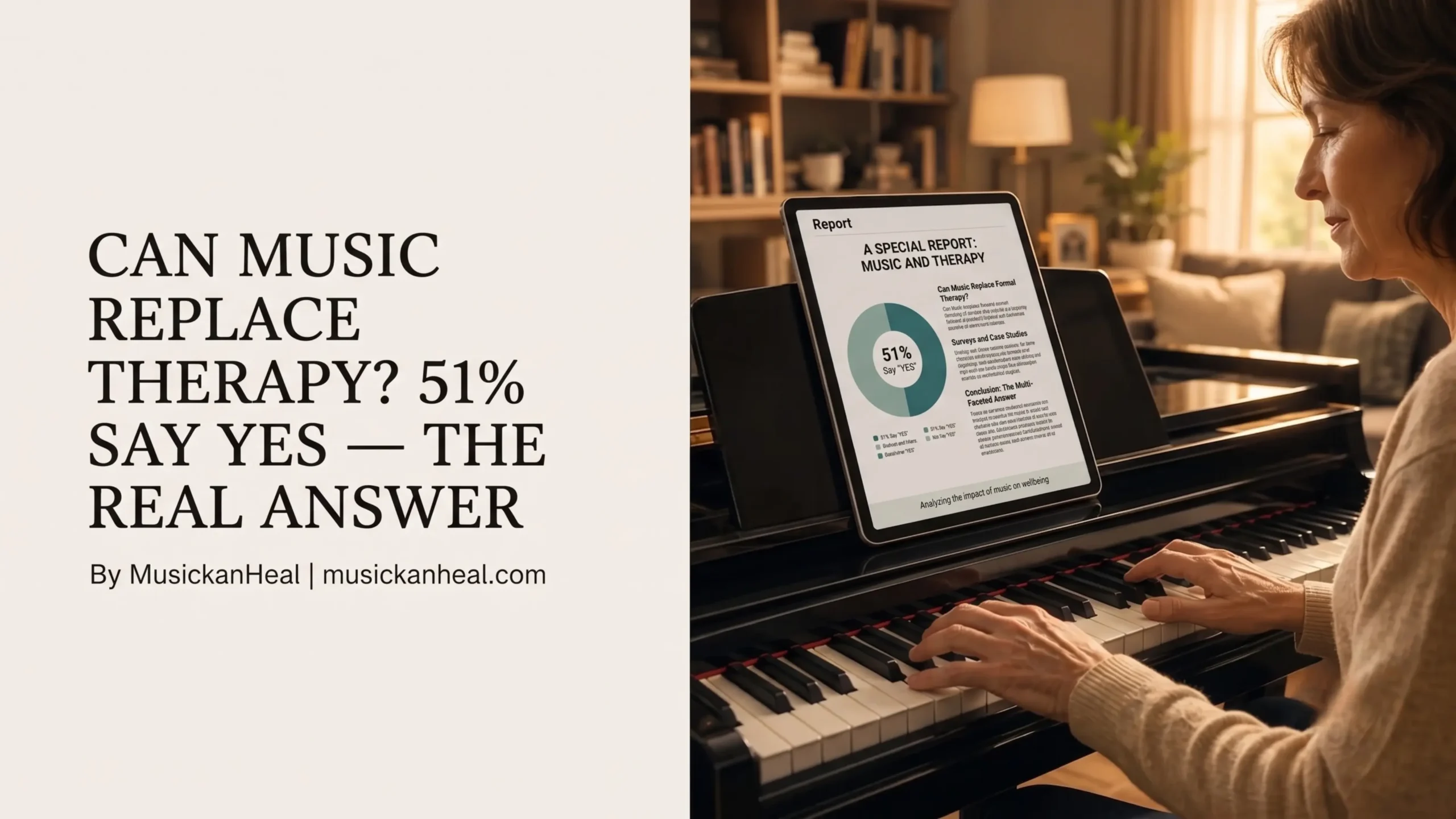
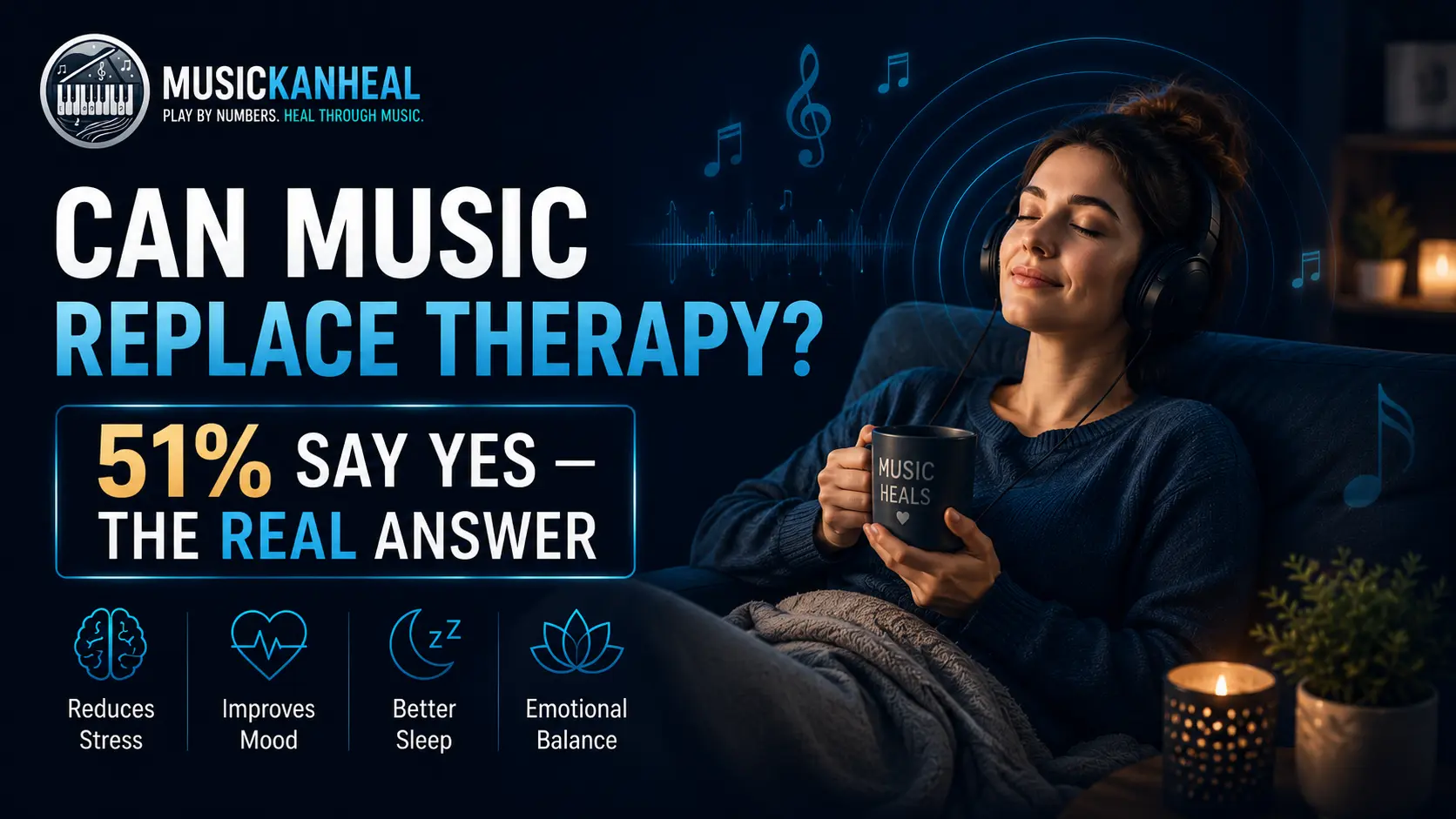
Half the country has already made the call. A 2026 survey of 1,000 U.S. adults by Tebra found that 51% have used music instead of traditional therapy, and 57% of that group believe it worked just as well. That is not a fringe statistic. That is a coin flip’s worth of Americans quietly self-treating with a playlist instead of a therapist.
So can music replace therapy, or is this the kind of shortcut that feels fine until it doesn’t? The honest answer sits in the uncomfortable middle: music does real, measurable things to your brain and mood, and it also can’t do several things a trained therapist does. Both of those facts are true at the same time, and most articles about using music instead of therapy only tell you one of them.
If you’ve searched “Can music replace therapy?” hoping for a clean yes or no, you’re not going to get one here — because the research itself doesn’t give a clean answer either.
This one covers both: what the data actually says, what music can and can’t do, and how to use it without quietly avoiding help you might actually need.
What the Tebra Survey Actually Found
The “51% say yes” framing floating around social media oversimplifies the data. Here’s what Tebra’s research actually measured: of 1,000 respondents surveyed in 2026, 51% said they had turned to music instead of therapy at some point, and 57% of those people rated the experience as just as impactful as formal treatment. That’s a self-reported perception, not a clinical outcome measure.
The same survey found that 92% of Americans say music has helped them through tough times — especially anxiety (55%), loneliness (52%), and depression (47%). Metal fans reported the strongest connection between music and coping, with 59% saying they’d substituted music for therapy at some point.
None of this proves music replaces therapy in a clinical sense. It proves that a majority of people are already using music as their default coping tool, often instead of seeking professional help, and many of them feel like it’s working. Whether it’s actually working the same way therapy would is a separate question — and it’s the one worth answering.
It also means the “can music replace therapy” question isn’t hypothetical for most readers. Statistically, you or someone you know has already answered it in practice, whether or not it was a conscious decision.
Why People Reach for Music Before They Reach for a Therapist
The reasons aren’t complicated. Music is free or nearly free. It’s available at 2 a.m. when a therapist’s office is closed. It doesn’t require scheduling, insurance, a waitlist, or explaining yourself to a stranger. For a lot of people, especially younger generations, music is simply the first tool within reach.
There’s also an access gap driving this. Therapy in the U.S. is expensive, and in many areas, hard to book quickly. Average out-of-pocket therapy costs push a lot of people toward whatever coping tool doesn’t come with a bill or a six-week waitlist. Music fills that gap by default, not necessarily by informed choice — it’s simply the thing that’s already in every pocket, free, and available at 2 a.m.
That matters, because “I used music instead of therapy” and “I used music instead of therapy because I researched both and music won” are two very different situations — and the Tebra data doesn’t distinguish between them. One is an informed trade-off. The other is a default that formed because the alternative was harder to reach, which is a very different reason to keep choosing music instead of therapy long-term.
What Music Can Actually Do for Your Mental Health
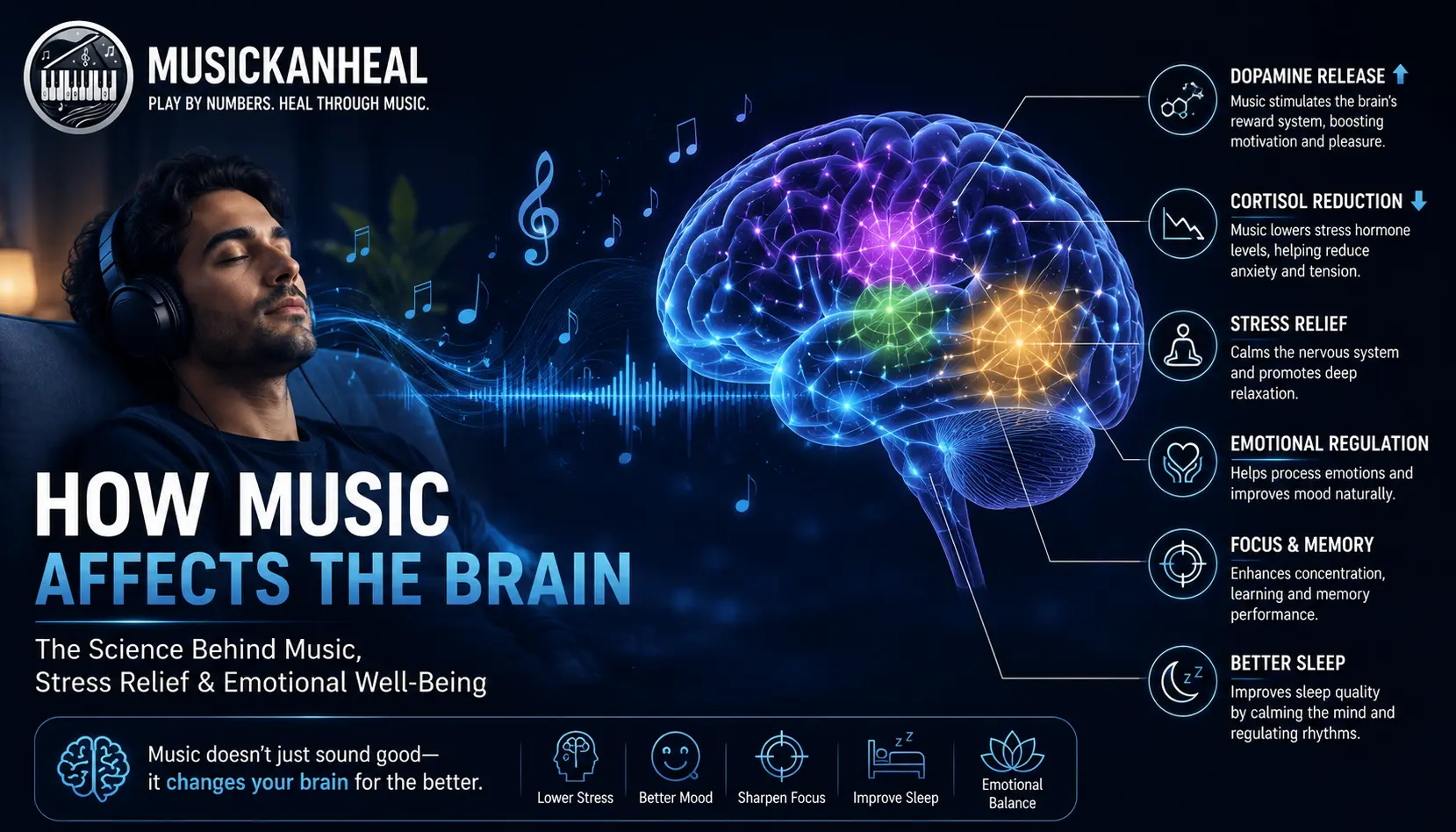
This part isn’t in dispute. A systematic review covered by Harvard Health found that music interventions — listening, singing, and structured music therapy — produced meaningful improvements in mental health-related quality of life, with smaller gains in physical health outcomes. The researchers didn’t find one universal “dose” that worked for everyone, but the overall direction was consistently positive.
Music engages the brain’s reward and emotion systems, including dopamine and serotonin pathways tied to mood regulation. That’s a physiological reason music instead of therapy can genuinely take the edge off a bad day — it’s not just a placebo effect or wishful thinking.
Specific, research-backed benefits include the following:
- Lower cortisol (stress hormone) levels after focused listening sessions
- Reduced self-reported anxiety and improved mood in the short term
- A non-verbal outlet for emotions that are hard to put into words, especially after trauma
- Improved focus and reduced perceived loneliness when used intentionally rather than as background noise
- A lower-barrier entry point for people who are reluctant to try talk-based treatment
That last point matters more than it might seem. A psychiatrist at Houston Methodist has noted that music can reach people who are initially resistant to traditional talk therapy — it can function as a bridge, not necessarily a replacement, for people who aren’t ready to sit across from someone and talk.
Music also works better socially than in isolation. A Mount Sinai-backed initiative found that music experienced socially produces measurably better mental health outcomes than music used alone — worth knowing if your version of “music instead of therapy” is headphones and a closed door every time.
Where Music Instead of Therapy Falls Short
Here’s the part the “yes” crowd tends to skip. Clinical music therapy — the kind delivered by a board-certified music therapist — is not the same as putting in earbuds and hitting shuffle. The distinction matters, because most of the 51% choosing music instead of therapy in the Tebra survey weren’t doing clinical music therapy. They were doing music medicine: self-directed listening without a trained provider guiding the process toward a specific goal.
A few things a licensed therapist provides that a playlist structurally cannot:
- A diagnosis. Music can’t tell you whether what you’re experiencing is situational stress, clinical depression, or something that needs medication. Misreading that distinction has real consequences.
- Accountability and structure. A therapist tracks patterns over weeks and months. A playlist doesn’t notice if your listening habits shift toward isolation or rumination instead of relief.
- Crisis intervention. If you’re in a mental health crisis, a therapist is trained to recognize warning signs and intervene. Music has no such safeguard.
- Trauma-specific techniques. Certain conditions, particularly complex trauma and psychosis, require specialized clinical approaches that go well beyond what listening to music can address, according to researchers who study music therapy’s real-world limits.
A music therapist interviewed by U.S. News made the point plainly: music therapy is not a substitute for other treatments tailored to trauma-exposed individuals, but it’s a genuinely useful option alongside them. That “alongside,” not “instead of,” is the distinction the 51% statistic glosses over.
Can Learning an Instrument Replace Therapy Sessions?
This is where the passive-versus-active distinction matters. Listening to music instead of therapy is one thing. Actively learning to play something is a different mechanism entirely, and the research on it is worth separating out.
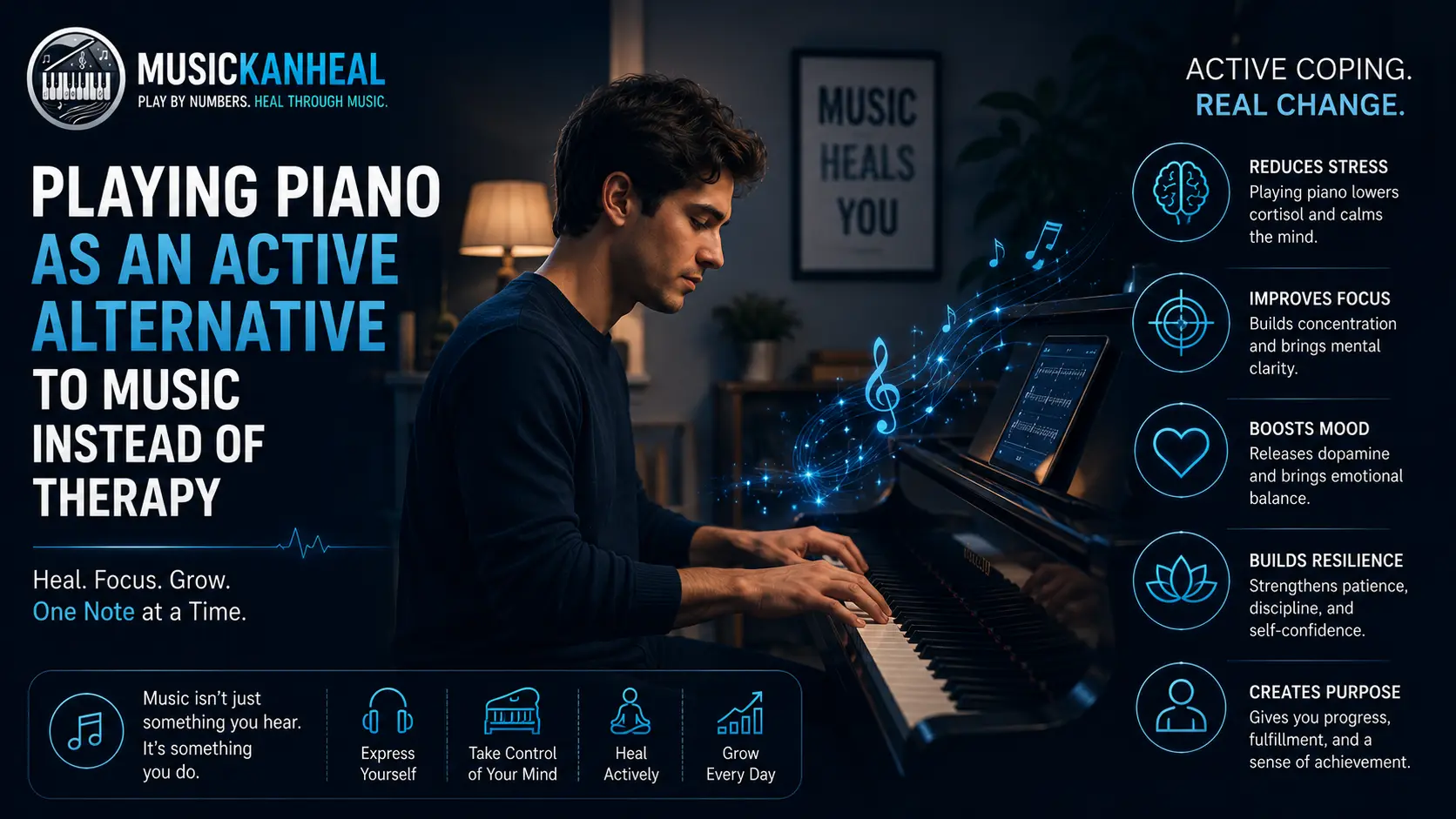
Active music-making — playing an instrument, not just listening — requires both hands, sustained attention, and emotional engagement with the material. That combination is closer to what a therapist would call “active coping” than passive listening is. The anxiety-reduction benefit isn’t tied to being able to read sheet music; it comes from active engagement itself — hands on the keys, intention behind what you’re playing, and an emotional connection to the piece, regardless of whether you can name the notes on a staff.
That’s the theory behind approaches like the Nashville Number System, which strips out the years-long barrier of learning to sight-read and lets a complete beginner play a real, recognizable song in a single session. Removing that barrier matters for the healing angle specifically — a self-help tool only works if people stick with it long enough to feel the benefit, and the biggest reason adults quit piano is the frustration of decoding notation before they’ve played anything satisfying.
That’s also the logic behind practicing piano specifically as an anxiety-management tool rather than just background listening — the structure of practice gives the active-engagement benefit a repeatable routine instead of a one-off session.
Still, playing an instrument, however accessible, is not clinical treatment. It’s a legitimate form of active self-care that engages different mechanisms than passive listening, but it carries the same limitation as any music-instead-of-therapy approach: no diagnosis, no crisis safeguard, no trauma-specific protocol.
How to Use Music as Support Without Replacing Care You Need
The Tebra data isn’t a verdict on whether music replaces therapy — it’s a starting point. Here’s a more useful framework than “yes” or “no” for deciding when music instead of therapy makes sense and when it doesn’t:
Use music for regulation, not diagnosis
Great for taking the edge off anxiety in the moment. Not a tool for figuring out what’s actually wrong.
Notice if you’re using music to avoid something, not process it
If your listening habits are trending toward isolation, or you’re using music to numb out rather than feel something, that’s a signal worth taking seriously.
Treat active engagement as the stronger tool
Playing, not just listening. The research consistently favors active participation over passive consumption for measurable mood benefits.
Don’t wait for a crisis to check in with a professional
If sadness, anxiety, or stress has lasted more than a couple of weeks and isn’t lifting, that’s the point to loop in a licensed therapist — music can run alongside that care, not instead of starting it.
Treat this as “both,” not “either”
The people in the Tebra survey who got the most value weren’t necessarily choosing music over therapy — many were likely doing both without realizing it counted as both.
Frequently Asked Questions About Music and Therapy
Can music actually replace therapy for anxiety or depression?
For mild, situational stress, yes — research backs measurable improvements in mood and lower cortisol after music listening. For clinical depression, anxiety disorders, or trauma, music alone is not equivalent to professional treatment, and using it as a full substitute can delay care that’s actually needed.
What percentage of Americans use music instead of therapy?
According to a 2026 Tebra survey of 1,000 U.S. adults, 51% reported using music instead of traditional therapy at some point, and 57% of that group said it felt just as impactful.
Is listening to music the same as music therapy?
No. Music therapy is a clinical practice delivered by a board-certified therapist working toward specific treatment goals. Listening to a playlist on your own — sometimes called “music medicine” — can still help mood and stress, but it isn’t the same structured, goal-directed process.
Can playing an instrument help with anxiety more than just listening to music?
Active music-making generally shows stronger engagement effects than passive listening because it demands sustained attention and hands-on participation. That said, it still isn’t a replacement for treatment if anxiety is persistent or significantly affecting daily life.
When should someone stop using music instead of therapy and see a professional?
If low mood, anxiety, or stress persists for more than two weeks, interferes with sleep, work, or relationships, or includes thoughts of self-harm, it’s time to involve a licensed professional. Music can continue to help as a supplement, but it shouldn’t be the only response at that point.
The Bottom Line
Fifty-one percent of Americans reaching for music instead of therapy isn’t proof that music replaces therapy — it’s proof that music is doing real emotional work for a lot of people, often by default rather than by informed choice. The research supports music as a genuinely effective regulation tool, and active engagement — like learning to play, not just listening — appears to work even better than passive listening alone. What the data doesn’t support is treating a playlist as a full substitute for diagnosis, accountability, or crisis care.
All rights are reserved. Copyright 2026 MusicKanHeal | musickanheal.com