Does Playing the Piano Actually Heal the Brain? What 2026 Research Shows
Peer-reviewed studies show measurable structural changes in the brain within weeks of starting to play, including reduced cortisol, preserved gray matter, and slower degeneration in the memory region of the brain.
This isn’t the usual “music is good for you” generality. The research now points to specific mechanisms — what changes, how fast, and why playing beats just listening. Here’s what the science actually shows.
Your Brain Activates Almost All at Once When You Play Piano
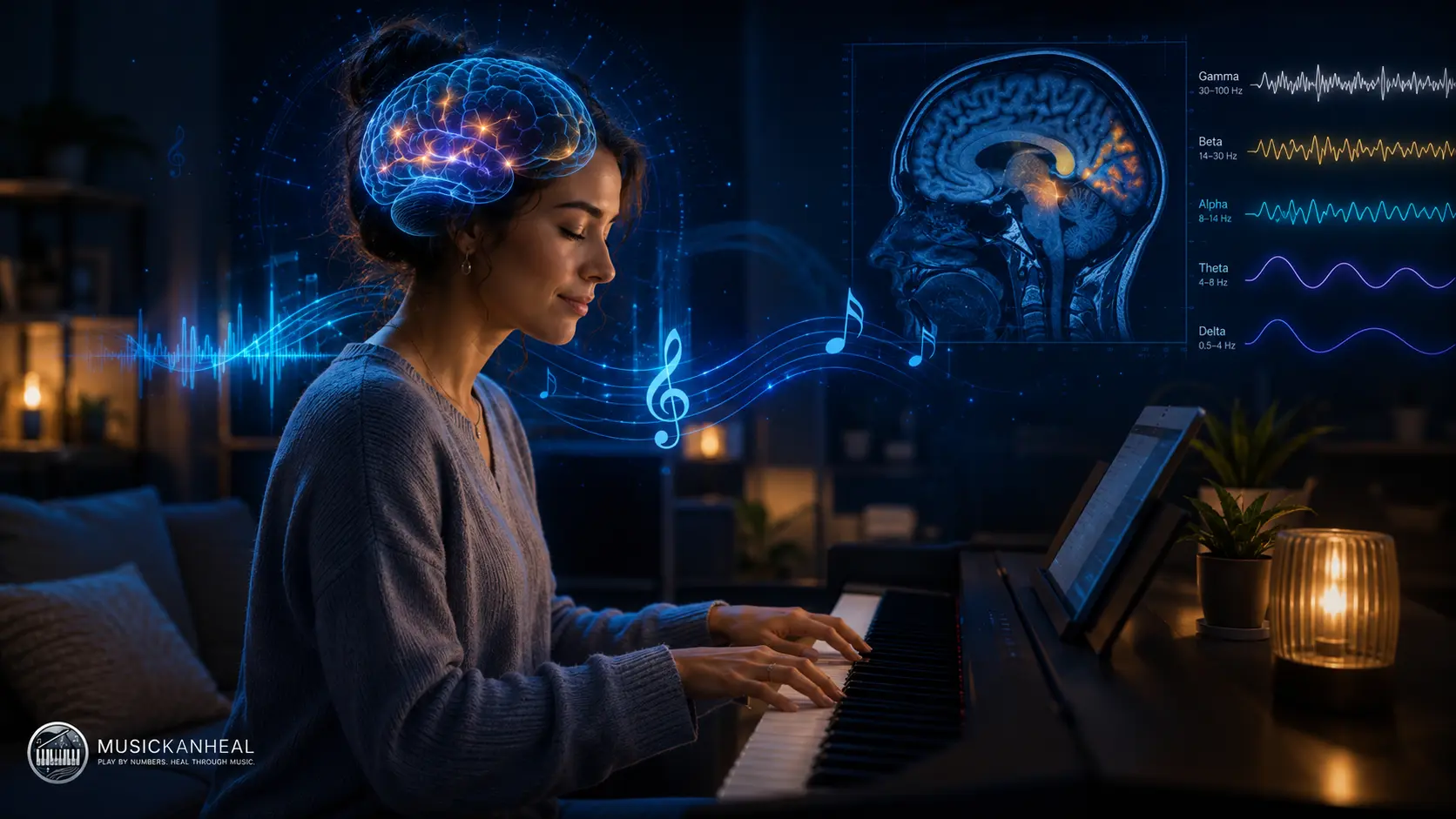
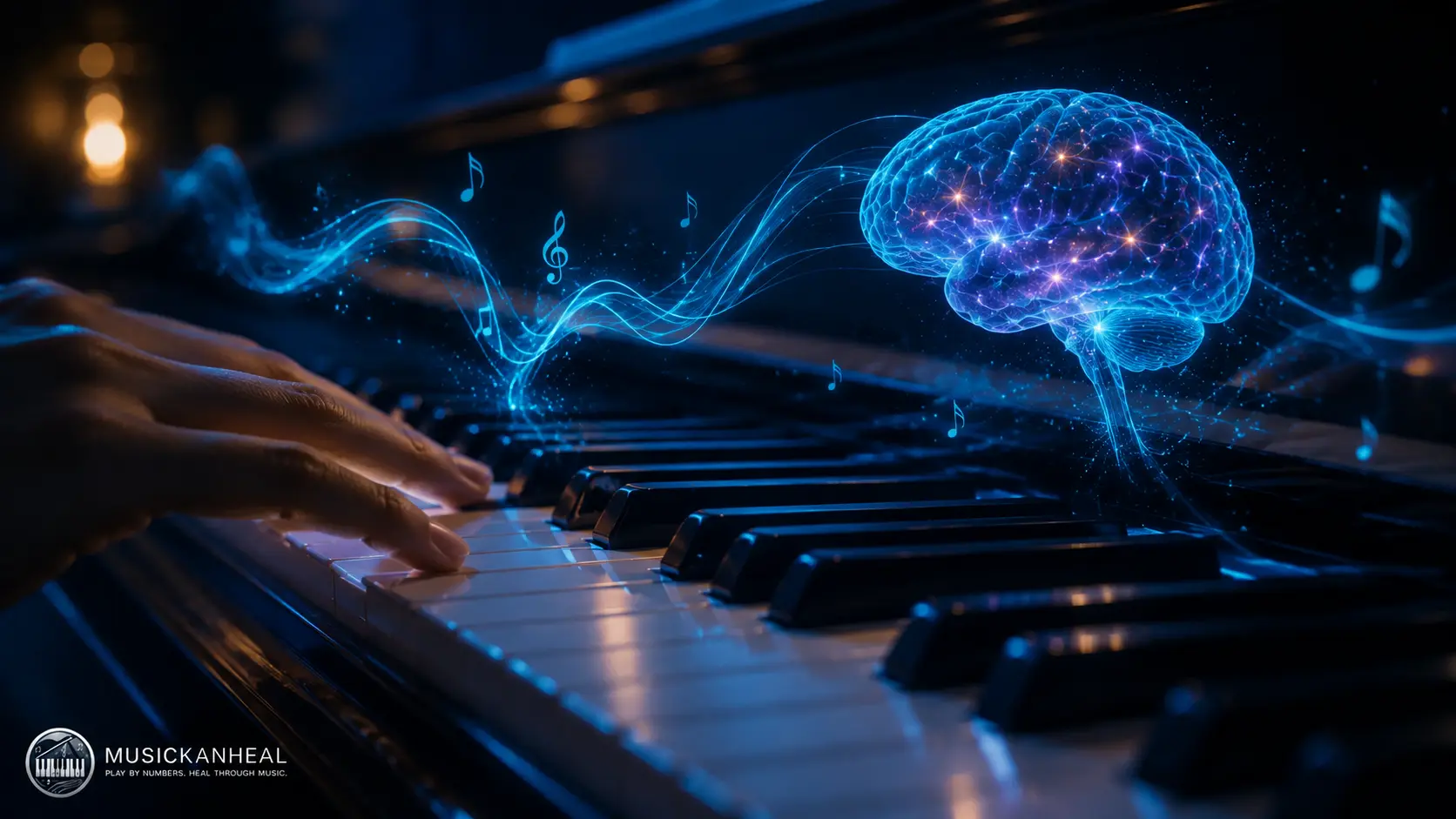
Most activities activate one part of the brain at a time. Piano playing activates almost all of it simultaneously. When you sit down and play, your brain is processing visual information (reading or recalling a piece), coordinating fine motor commands to both hands independently, monitoring auditory feedback in real time, and regulating the emotional response the music produces. That combination is rare.
Dr. Jonathan Burdette, a professor of neuroradiology at Wake Forest University School of Medicine, calls it a “whole brain workout” — and that framing holds up under imaging studies.
A 2021 review published in Frontiers in Neuroscience by researchers at the Nencki Institute of Experimental Biology confirmed that musical training produces experience-dependent changes across auditory, motor, and prefrontal regions of the adult brain. This isn’t passive absorption — it’s active neurological remodeling.
The critical point: passive music listening produces real benefits too, but they are consistently smaller. The active engagement of playing is what drives the deeper structural changes.
Just 11 Weeks of Playing Measurably Cuts Anxiety and Depression
A randomized controlled study by researchers at the University of Bath, published in Nature Scientific Reports, took 31 adults with no prior musical experience and split them into three groups: piano training, music listening, and a control group. The piano group completed one hour of lessons per week for 11 weeks. After just a few weeks, participants in the piano training group reported significantly lower depression, stress, and anxiety scores — compared to where they started, and compared to both other groups.
That’s a meaningful finding because it controls for the relaxation effect of simply listening to calming music. The piano group didn’t just feel better because music is pleasant. The act of learning and playing produced changes that passive listening did not.
A separate 2025 study published in Schizophrenia Bulletin by Shaoyu Zhang looked specifically at long-term piano music therapy with adolescents diagnosed with anxiety disorders. The conclusion: piano therapy reduced anxiety and produced positive impacts on long-term mental health by activating brain neural networks — not just providing temporary comfort.
For anyone dealing with stress or anxiety, this distinction matters. The effect isn’t mood management. It’s a neurological change.
Piano Brain Healing Preserves Gray Matter That Music Listening Cannot
A study published in Neuroimage: Reports tracked two groups of older adults over six months. One group received weekly piano lessons and practiced five days a week; the other engaged in active music-listening sessions. After six months, the piano group showed no reduction in gray matter in the right primary auditory cortex. The music-listening group lost gray matter volume in the same region.
Gray matter loss in auditory processing regions is a normal part of aging, and a contributing factor to cognitive decline. The piano group essentially paused that process. Dr. Damien Marie, one of the researchers, noted that the brain doesn’t reverse aging — but the data showed that regular practice can slow atrophy in specific regions tied to memory and perception.
A parallel finding from Frontiers in Aging Neuroscience found that the fornix — a brain region directly associated with episodic memory — degenerated at a slower rate in adults who took piano lessons compared to those who didn’t. Episodic memory loss is one of the earliest clinical signs of Alzheimer’s disease.
These aren’t peripheral benefits. They’re structural.
Playing Piano Reduces Dementia Risk and Builds Cognitive Reserve
The answer, based on current evidence, is that it appears to reduce risk and delay onset — not eliminate it. The PROTECT study, a large longitudinal brain health study, found that lifetime exposure to musical instruments was linked to improved scores on memory and thinking tests. According to the Fisher Center for Alzheimer’s Research Foundation, which reviewed the PROTECT data, piano specifically produced the greatest cognitive benefits of any instrument studied — outperforming woodwinds, brass, and other instruments on executive function tests.
A twin study on cognitive reserve found that when one identical twin played a musical instrument and the other didn’t, the musical twin showed dramatically lower rates of dementia. Because twins share genetics, the study design isolates music as the variable. That kind of evidence is unusually clean.
The National Endowment for the Arts Research Lab at Florida State University ran a randomized controlled trial showing that 16 weeks of piano training significantly increased verbal fluency in older adults — more than computer-assisted cognitive training programs.
Regular piano practice appears to build what researchers call cognitive reserve — a neurological buffer that makes the brain more resilient to the damage that causes dementia symptoms. The earlier you build it, the more you have.
Piano Outperforms Brain Training Apps — By a Wide Margin
The brain training industry is worth billions and most of its products have weak evidence behind them. Piano practice outperforms most cognitive training apps for one structural reason: it is multisensory and emotionally engaged.
A November 2025 review published in Brain Sciences (Yoshihiro Noda and Takahiro Noda, Department of Psychiatry, International University of Health and Welfare, Tokyo) synthesized evidence from neuroimaging, endocrinology, and randomized trials. The review concluded that active musical experiences produce long-term structural connectivity alterations that support affect regulation, cognition, social functioning, and resilience to neuropsychiatric illness.
According to Steinway & Sons’ published research on music and health, people who actively make music experience less anxiety, lower rates of loneliness, and stronger memory than their non-playing peers — a correlation that holds across age groups.
The key mechanism is what researchers call multisensory training. When you learn piano, you’re coupling visual reading or memorization with auditory output and bilateral motor coordination. That combination forces multiple brain networks to communicate simultaneously and strengthen those connections over time. A cognitive app doesn’t come close to replicating that demand.
How Much Practice Does It Take to See Brain Benefits?
Less than most people expect.
The University of Bath study saw measurable cognitive and mood changes in participants who practiced just one hour per week over 11 weeks. That’s the floor — not an optimized protocol. Researchers noted the changes appeared within the first few weeks.
For structural benefits like gray matter preservation, the evidence points to more regular practice: the NeuroImage study used a protocol of five days per week, 30 minutes per session. But even that is a modest time commitment.
The critical variable isn’t duration — it’s active engagement. Mindlessly running through the same piece you already know doesn’t produce the same neurological demand as working on something just beyond your current ability. The brain adapts to challenge, not repetition.
For beginners starting from zero, a method that removes the barrier of traditional sheet music — like the Nashville Number System approach used by MusicKanHeal — can make active engagement easier because you spend less time frustrated and more time actually playing.
The Emotional and Healing Side of Piano: What Research Confirms
Piano brain healing isn’t only about executive function and gray matter. The emotional dimension has its own research backing.
A 2006 study found that musical engagement lowers cortisol — the primary stress hormone — measurably. Playing an instrument provides something that most stress-management approaches don’t: a focused, motor-engaging activity that occupies the analytical mind while activating the reward system. That’s a rare combination.
The result is something pianists often describe and researchers now confirm: playing produces a state that’s neither passive relaxation nor active cognitive strain. It’s absorbing without being stressful. For people with anxiety specifically, that window is valuable because anxiety tends to colonize idle mental space.
If you’re looking for that kind of experience without committing to years of music theory, MusicKanHeal’s guided healing audio and music therapy tools offer a starting point — especially for days when you want the benefits of musical engagement without the cognitive demand of active practice.
The research also points to a social dimension. Group musical engagement — choir, band, and collaborative practice — shows additional mental health benefits beyond solo practice. Connection through music activates social reward circuitry, which compounds the emotional effects of playing alone.
Frequently Asked Questions About Piano Brain Healing
Does playing the piano actually heal the brain or just improve mood temporarily?
Both effects are documented, but they’re separate. Mood improvements appear quickly — within a few weeks of starting — but the structural changes that qualify as genuine piano brain healing take longer and require consistent practice. Six months of regular playing has been shown to preserve gray matter and slow the degeneration of memory-related brain structures. Short-term mood improvement is real, but it’s not the same as the neurological remodeling that sustained practice produces.
How long does it take to see brain benefits from playing piano?
The University of Bath’s randomized controlled study found measurable improvements in cognitive processing and mood after just a few weeks of one hour of practice per week. Structural changes — preserved gray matter, slower memory region degeneration — appeared in studies using six-month protocols with more frequent practice. The fastest benefits are emotional and attentional; the deeper structural benefits take months.
Is piano better for brain health than other instruments?
Current evidence suggests yes. The PROTECT study, which tracked brain health over many years, found that playing the piano produced the greatest improvements in executive function and memory among all instruments studied. Researchers attribute this to the piano’s simultaneous demands on both hands, bilateral motor coordination, visual reading, and auditory feedback — a combination that forces more extensive neural network engagement than most other instruments.
Can piano brain healing help with anxiety disorders specifically?
A 2025 study published in Schizophrenia Bulletin found that piano music therapy produced long-term reductions in anxiety in adolescents diagnosed with anxiety disorders, with effects extending beyond the treatment period. The mechanism involves activating brain neural networks associated with emotional regulation. The University of Bath study also found significant drops in self-reported anxiety scores after 11 weeks of piano training in adults with no prior experience.
Does listening to piano music have the same brain healing benefits as playing it?
Not to the same degree. Multiple studies directly compare active playing to passive listening and consistently find that playing produces greater cognitive and structural benefits. Listening to music does reduce stress hormones and improve mood, and long-term listening habits are associated with lower dementia risk. But the neuroplastic changes — the ones that preserve gray matter and strengthen memory structures — appear significantly more pronounced in people who actively play.
All rights are reserved. Copyright 2026 MusicKanHeal | musickanheal.com