Music Therapy for Mental Health: What 51% of Americans Get Wrong
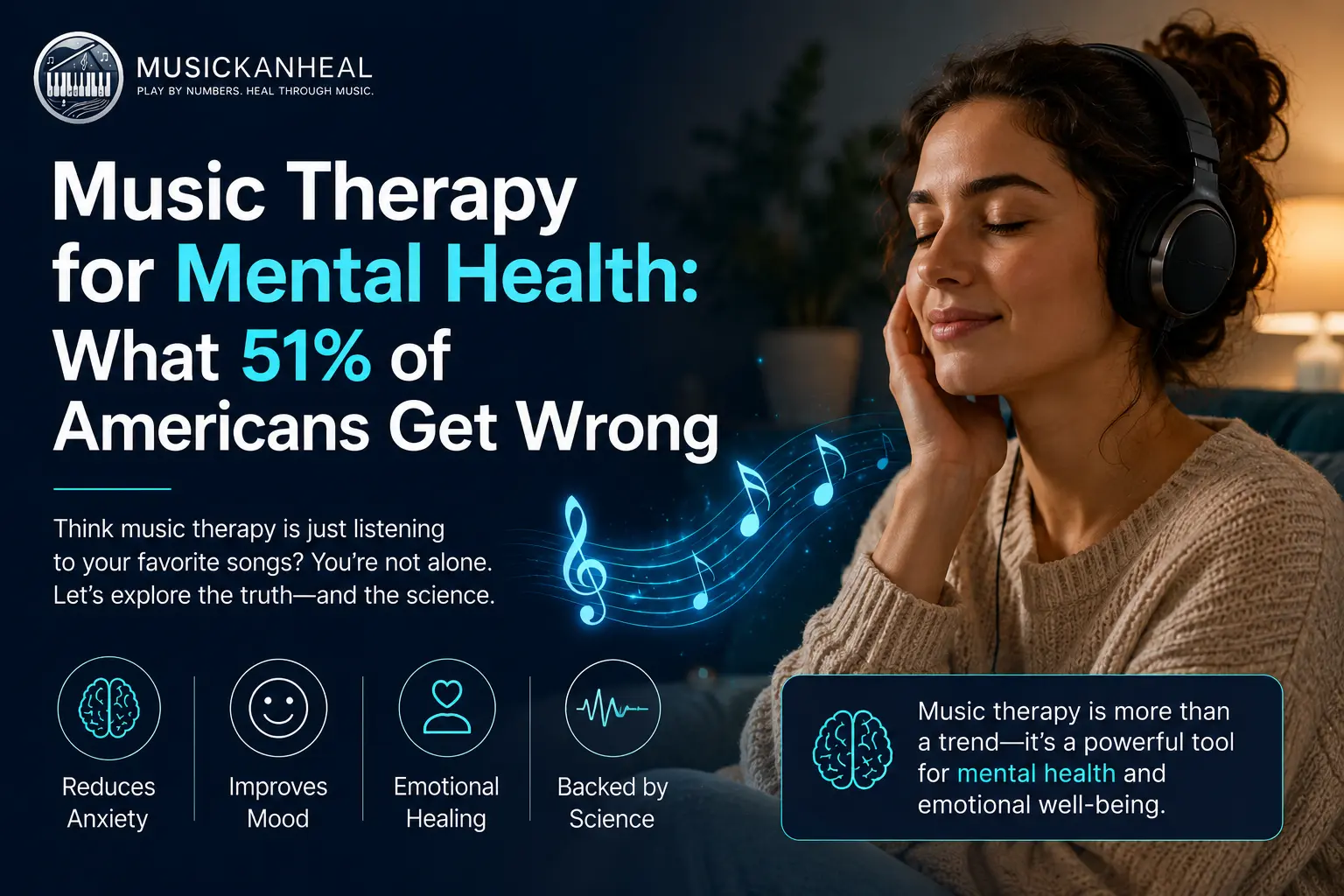
Half of Americans have swapped a therapy session for a playlist. According to a survey by Tebra that analyzed over 110,000 Spotify tracks and polled 1,000 adults, 51% of Americans have used music instead of traditional therapy — and 57% believe it works just as well.
That’s a significant number of people making a very large assumption.
Music is a legitimate tool for mental well-being. The science on that is solid. But “just as effective as therapy” is a different claim, and it’s worth examining carefully before you cancel your therapist’s appointment and build a healing playlist instead.
This guide covers music therapy for mental health as it actually works — what it helps, where it falls short, and how to use it without accidentally trading real care for a comfortable habit.
What Is Music Therapy for Mental Health, and Who’s Actually Using It?
The phrase “music therapy” gets used two different ways, and mixing them up creates real confusion.
Clinical music therapy is a credentialed healthcare practice. A board-certified music therapist assesses a patient’s needs, designs a structured intervention program, and guides sessions that may include singing, instrument play, lyric analysis, or guided listening. This is what psychiatric units, hospitals, and rehabilitation centers use. It requires a trained professional and a sustained therapeutic relationship. As Cleveland Clinic notes, casual listening does not qualify as clinical music therapy — regardless of how intentional it feels.
Self-directed music listening is what most people actually do. You’re overwhelmed; you put on a playlist, and you feel better for a while. This is legitimate and has measurable benefits — but it is not the same as what a credentialed therapist delivers in a clinical setting.
The 51% in the Tebra data were mostly using the second definition. They were listening to music instead of seeing a therapist, not receiving formal music therapy for mental health from a professional. That gap matters, because what self-directed listening can do and what it cannot do are genuinely different things.
What Happens in Your Brain When You Listen to Music?
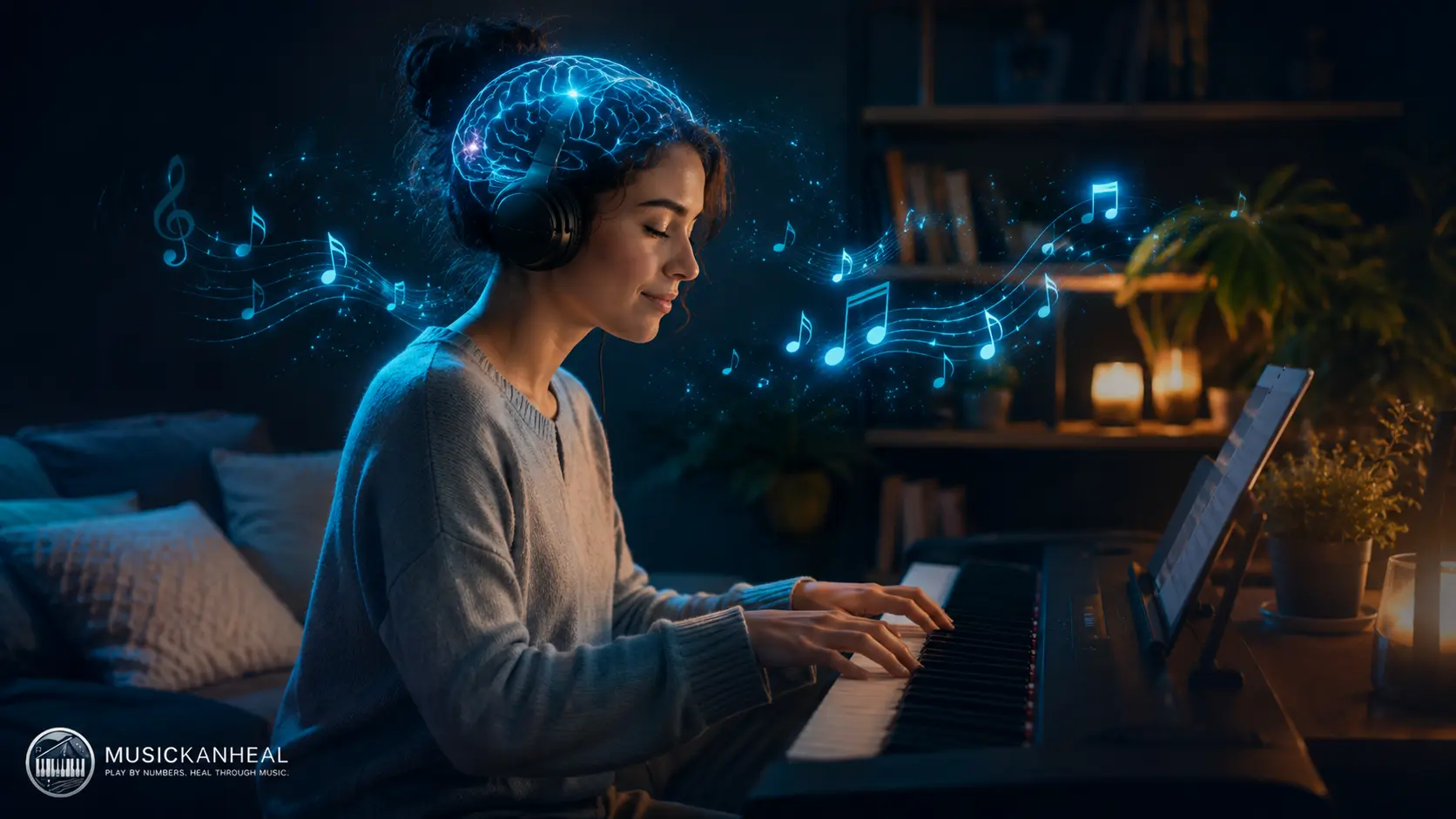
The reason music works at all comes down to how the brain processes it. Unlike almost anything else, research from Johns Hopkins Medicine shows that music activates multiple brain regions simultaneously — the auditory cortex, motor circuits, emotional centers, and memory systems all engage at once.
When you hear a song you love, your brain releases dopamine. Heart rate slows. Cortisol, the primary stress hormone, drops. Neurons begin to synchronize with the rhythm of the music — a process called “entrainment.” That’s why a driving tempo can push you through an exhausting run and a slow piece can bring you to the edge of tears without warning.
A meta-analysis of 400 studies by neuroscientist Daniel Levitin found that music improves immune function, lowers cortisol, and in some studies outperforms anti-anxiety medication as a pre-surgery intervention. These are not trivial findings.
But here is the honest limit of what brain science tells us: music changes your state. It shifts your emotional temperature in the moment. What it does not do, on its own, is change the thought patterns, habitual behaviors, or structural causes behind chronic mental health conditions. Changing how you feel for an hour is not the same as changing why you feel that way.
If you’re curious about specific sound-based tools — including how binaural beats and solfeggio frequencies compare — this breakdown on binaural beats vs solfeggio frequencies goes deeper on the science.
Can Listening to Music Replace Therapy? Here’s What the Research Shows
The short answer is no for clinical conditions and often yes for everyday wellbeing maintenance. The line between those two categories is where things get complicated.
A review published by NAMI (National Alliance on Mental Illness) found strong evidence for music therapy improving outcomes in depression, trauma, and schizophrenia — but the research is specifically on structured music therapy for mental health delivered by trained therapists, not passive listening. The structure and the therapeutic relationship both matter.
For people managing diagnosed depression, active PTSD, or severe anxiety disorders, a playlist is a support tool at best, not a treatment. A board-certified music therapist described it plainly: music won’t cure depression, but it helps manage the symptoms. That’s a meaningful distinction.
Where the picture looks different is for people handling ordinary stress, processing everyday emotional weight, or working through situations that don’t meet the threshold of a clinical diagnosis. For that population — which is most people, most of the time — intentional music for mental health has real, measurable effects on anxiety, mood, and sleep quality.
Where Music for Mental Health Genuinely Works
There are specific situations where the evidence for music as a mental health tool is strong enough to take seriously:
- Stress and anxiety reduction. Clinical trials consistently show that music listening lowers physiological stress markers — cortisol, blood pressure, and heart rate. A 2023 study examining auditory beat stimulation combined with music found significant reductions in state anxiety among participants with moderate anxiety disorders, even across just 24 minutes of listening.
- Mood regulation. Rhythmically and emotionally engaging music gives your brain a practical mechanism for shifting emotional state. For people who struggle with emotional dysregulation but aren’t in active crisis, this is a genuinely useful daily tool.
- Sleep improvement. Slow-tempo music around 60–80 BPM has been shown in multiple studies to help people fall asleep faster and report higher sleep quality, likely through its effect on heart rate and cortisol levels at the end of the day.
- Pain management. Research in palliative care settings shows that music listening measurably reduces perceived pain intensity. The proposed mechanism involves attention redirection and the modulation of pain signals in the brainstem and cortex.
- Social connection. Research supported by Mount Sinai researchers found that shared musical experiences build genuine social bonds and reduce isolation — something that social music and mental health research makes a compelling case for.
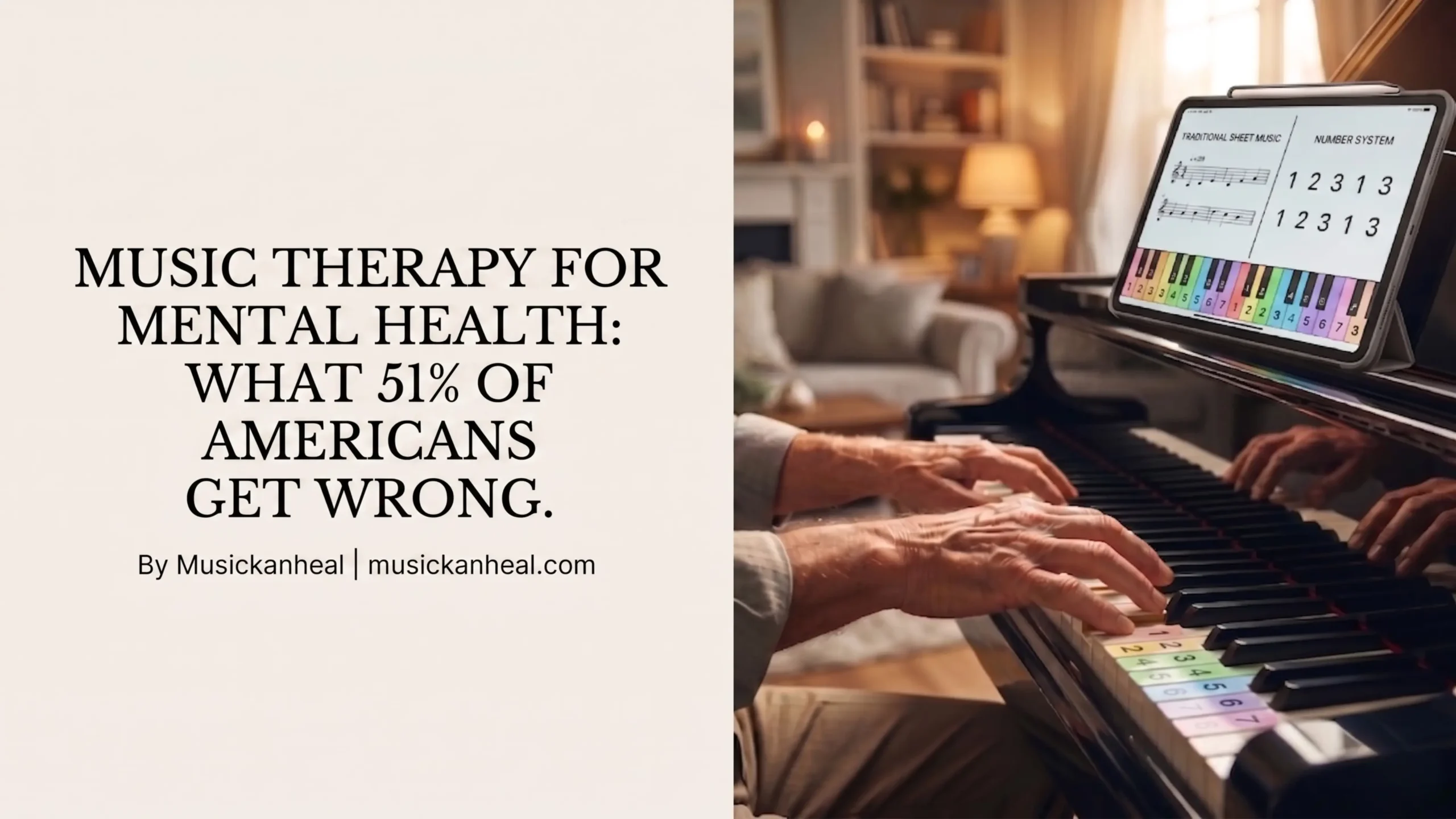
Active music-making compounds the benefits. This is the part most conversations skip. Playing an instrument, even at a beginner level, produces greater neural engagement than passive listening alone. Learning to make music adds a cognitive dimension — motor learning, pattern recognition, and creative expression — that sitting with headphones on simply doesn’t. This is why the MusicKanHeal healing audio and music therapy approach offers both: structured therapeutic listening and an entry point into actively making music yourself.
The 3 Situations Where Music Is Not Enough
Music has genuine benefits. It also has real limits. Here are the three situations where using music instead of professional support is a mistake worth naming directly:
1. Active Clinical Depression or Anxiety Disorders
Cognitive behavioral therapy and other evidence-based treatments work by changing thought patterns, not just lifting mood temporarily. A good playlist can make you feel better for an hour. It cannot restructure the cognitive distortions that sustain chronic depression over months. If you have been struggling consistently for weeks and nothing is shifting, a playlist is not a treatment plan.
2. Trauma
Processing trauma requires a structure that passive listening cannot provide. Trauma responses involve the nervous system in specific ways — hypervigilance, dissociation, and intrusive memories — and unguided music listening can activate these responses rather than resolve them. This is why even formal music therapy for mental health trauma work is done carefully, with a trained professional guiding the process and monitoring the patient’s response.
3. Crisis Situations
If you are in crisis — experiencing suicidal ideation, acute panic that won’t resolve, or psychiatric symptoms that impair your functioning — please contact a mental health professional or crisis line. Music is not equipped to provide safety planning, psychiatric assessment, or emergency support.
The problem is not that music is ineffective. It is that it gets used as a reason to avoid professional care. And for the people who need that care most, that delay has real consequences.
How to Use Music More Intentionally for Your Mental Health
If you use music as a mental health support tool — and there are good reasons to do so — small shifts in how you use it make a measurable difference:
- Match your mood before shifting it. Research on the “iso principle” in music therapy suggests starting with music that mirrors your current emotional state, then gradually shifting toward something calmer or more positive. Jumping straight to upbeat music when you’re genuinely low tends to feel jarring rather than helpful.
- Use it to process, not to avoid. There is a difference between music that helps you sit with difficult emotions and music that drowns them out temporarily. One builds your capacity for emotional regulation over time. The other delays the process.
- Add active engagement. Even basic piano learning significantly increases the cognitive and emotional benefit compared to passive listening alone. If you’re investing in music for mental health, making music compounds the return. Explore MusicKanHeal’s healing audio and music tools to get started.
- Watch your patterns honestly. For some people, sad music helps process grief and move through it. For others, it prolongs rumination. Neither is universal. You know yourself better than any recommendation does.
Frequently Asked Questions About Music Therapy for Mental Health
Is music therapy for mental health the same as just listening to music?
No, and the difference has clinical weight. Music therapy for mental health in the clinical sense is a credentialed practice led by a board-certified therapist who designs structured interventions within a therapeutic relationship. Listening to music independently is a self-care tool with documented benefits, but it doesn’t qualify as clinical music therapy by professional or regulatory definitions.
Can music therapy for mental health help with depression?
Clinical music therapy delivered by a trained therapist has been shown to reduce depressive symptoms in multiple research studies. Self-directed listening offers mood and stress support but is not a standalone treatment for clinical depression. For moderate to severe depression, professional care remains essential, and music works best as a complement to that care.
How long should I listen to music to get mental health benefits?
Studies vary, but sessions of 20–30 minutes of intentional listening have shown measurable reductions in anxiety and cortisol. Duration matters less than consistency and intention. Regular daily listening appears to have cumulative mood and stress benefits that a single session does not replicate.
Why do some people feel worse after listening to sad music?
This depends on individual differences in emotional processing style. Some people use sad music to move through feelings and come out the other side. Others use it as a way to stay in difficult emotions longer. If music consistently leaves you feeling more depleted than you started, it may be reinforcing rumination rather than processing it. That’s a pattern worth adjusting.
Can children benefit from music therapy for mental health?
Yes, and often quite well. Research shows music therapy improves emotional regulation, social skill development, and communication in children across anxiety, ADHD, autism spectrum conditions, and trauma backgrounds. Children respond readily because music engagement doesn’t require them to articulate feelings verbally — the music creates space for expression on its own.
All rights are reserved. Copyright 2026 MusicKanHeal | musickanheal.com