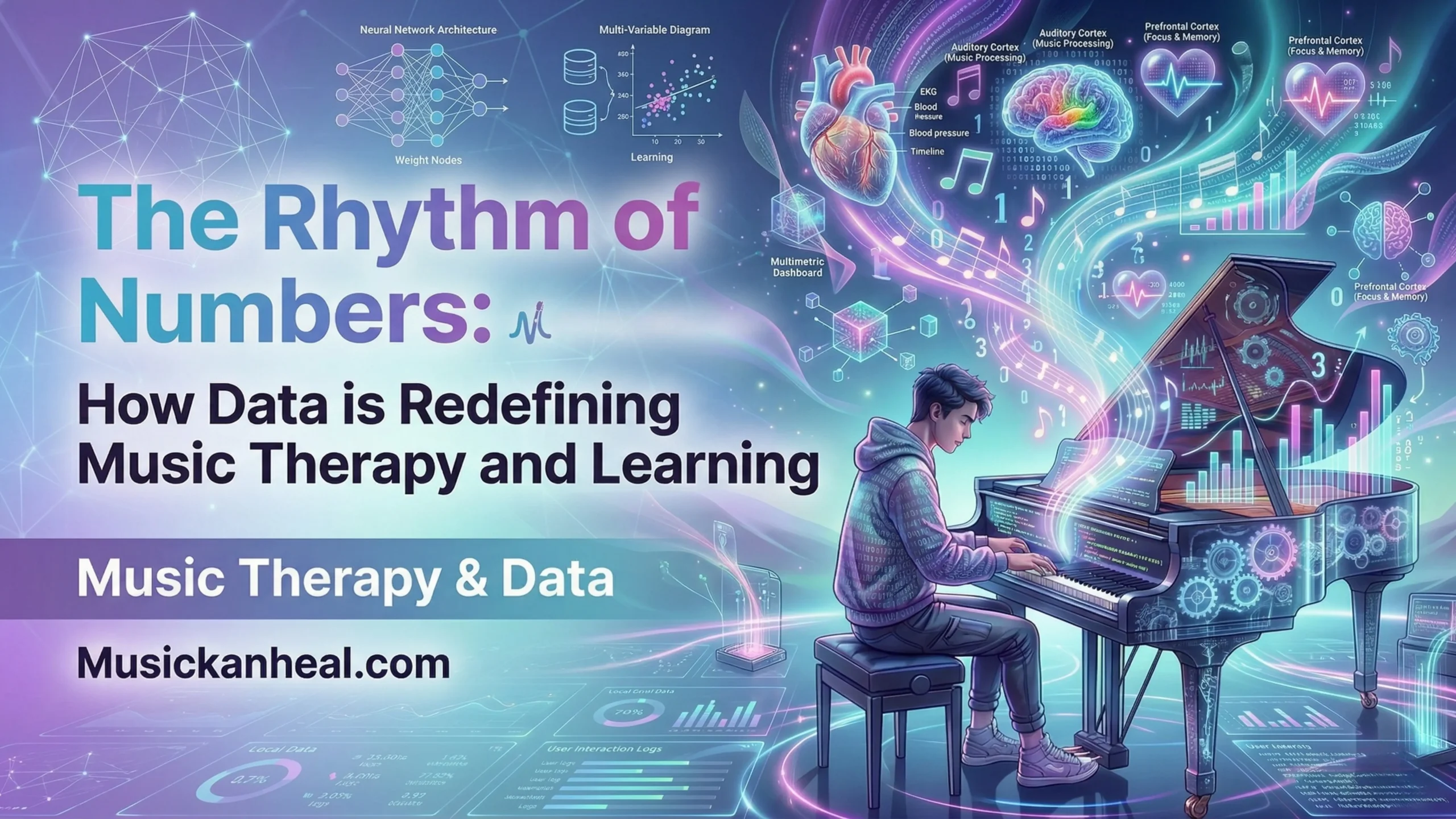
The Rhythm of Numbers:
For centuries, many people regarded music as a purely ethereal art form. In fact, most believed it was an emotional output that defies logic. However, as we move further into the digital age, we are discovering a new reality. Specifically, we now see that the soul of music is actually built on a foundation of data.
Consider the mathematical precision of a Bach fugue. Then, look at the algorithmic recommendations on your favorite streaming app. In both cases, data is the invisible conductor. Furthermore, this information creates the entire structure of our modern musical world.
At MusickanHeal, we believe that understanding the data behind the notes is essential. Consequently, this approach is the fastest way to bridge the gap between “wanting to play” and “actually playing.”
The Nashville Number System: Simplifying Musical Data
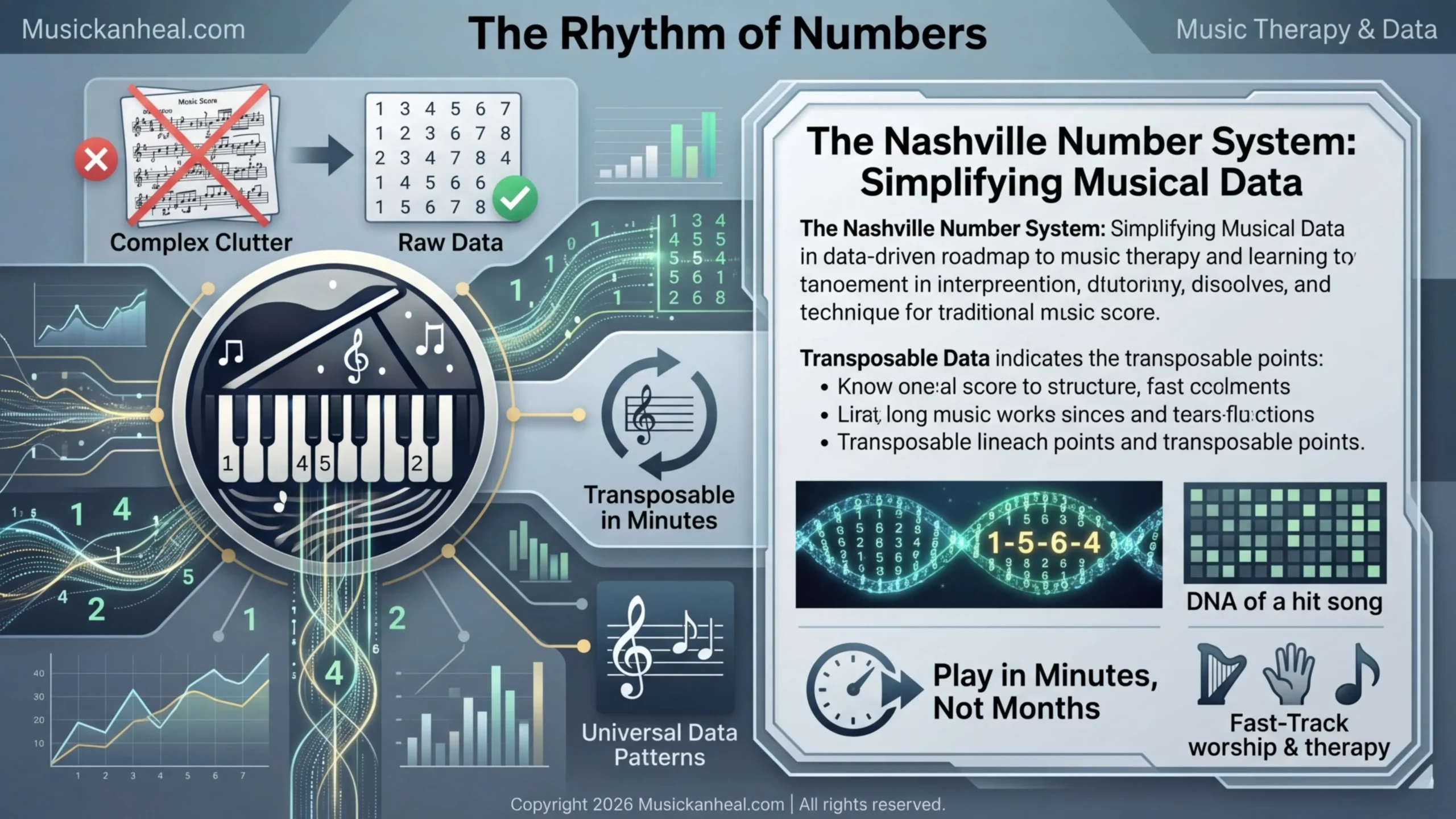
Initially, traditional sheet music can feel very intimidating. This is because it is a complex visual language that often takes years to master. But what if you could strip away the clutter? As an alternative, you could look at the raw data of a song instead.
The Nashville Number System is the core of the MKH Method. Specifically, it simplifies the way we see music. By assigning numbers to scale degrees, we convert complex harmonic structures into accessible points. As a result, these transposable data points make learning much faster.
Therefore, this data-driven approach helps beginners play worship songs or therapeutic melodies in minutes.
Music Therapy: When Clinical Data Meets the Brain
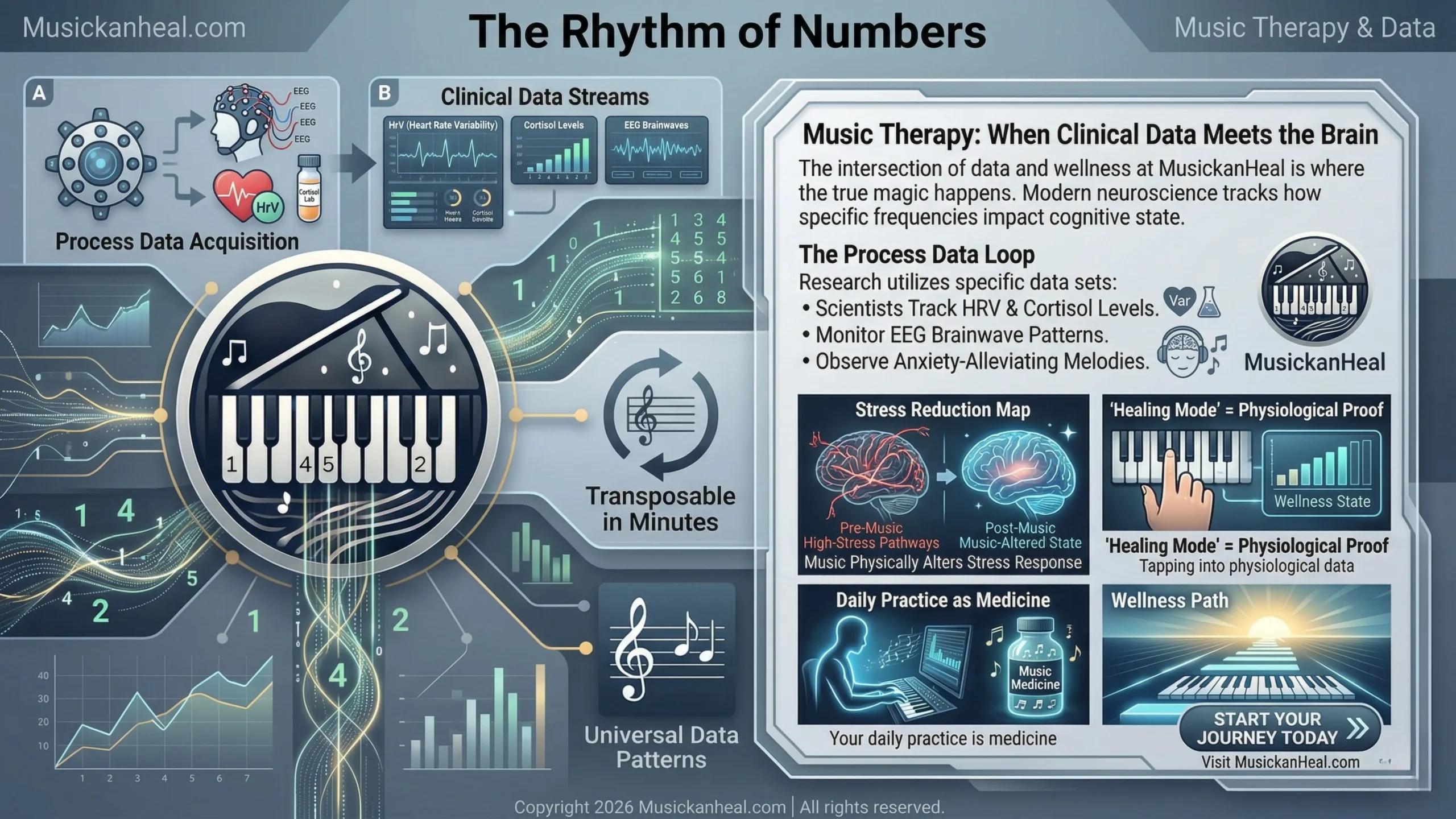
The intersection of data and wellness is where the true magic of MusickanHeal happens. Currently, modern neuroscience is able to track how specific frequencies impact our cognitive state.
Research in music therapy heavily utilizes “process data.” For instance, scientists track heart rate variability (HRV) and cortisol levels. Additionally, they monitor EEG brainwave patterns. By doing so, they can see exactly how melody alleviates anxiety and depression.
In addition, when we talk about “Healing Mode” at MusickanHeal, we aren’t just using a marketing term. Rather, we are tapping into physiological data. Clearly, this information proves that music can physically alter our stress response. Consequently, your daily practice becomes a form of medicine.
Why a Data-Driven Roadmap Works for You
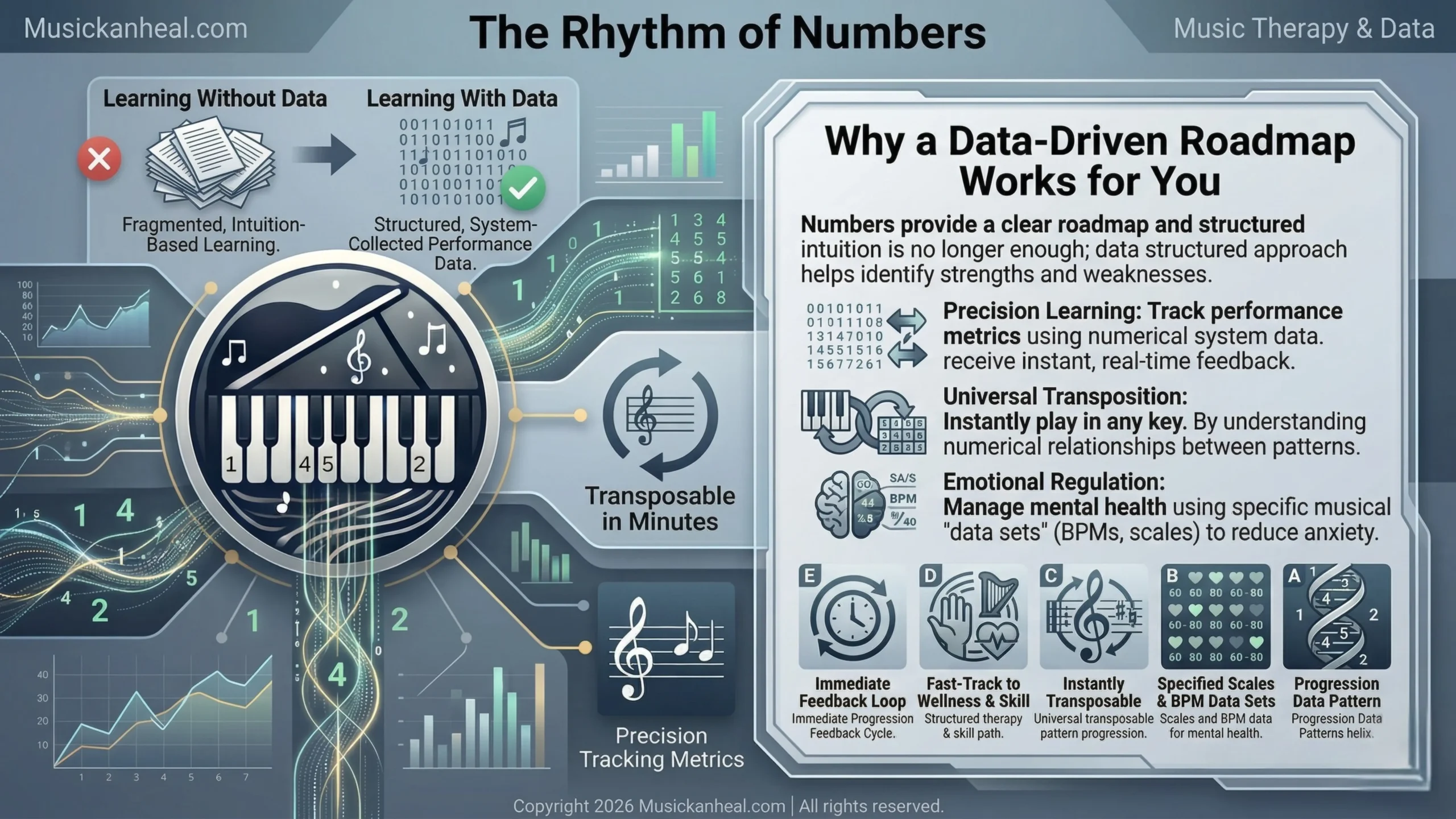
Why should the average learner care about data? Primarily, it is because numbers provide a clear roadmap. Often, talent feels like a dead end for many people. However, a structured approach helps learners identify their strengths and weaknesses.
- Precision Learning: You can track your progress through numerical systems. Consequently, you get immediate feedback via real-time data.
- Universal Transposition: You can play any chord progression in any key instantly once you understand the numerical data. Indeed, this is the secret of professional players.
- Emotional Regulation: You can use specific musical “data sets” to manage your mental health. Specifically, certain BPMs and scales help you reduce anxiety or enhance focus.
Embracing the Future: AI and Practice Data
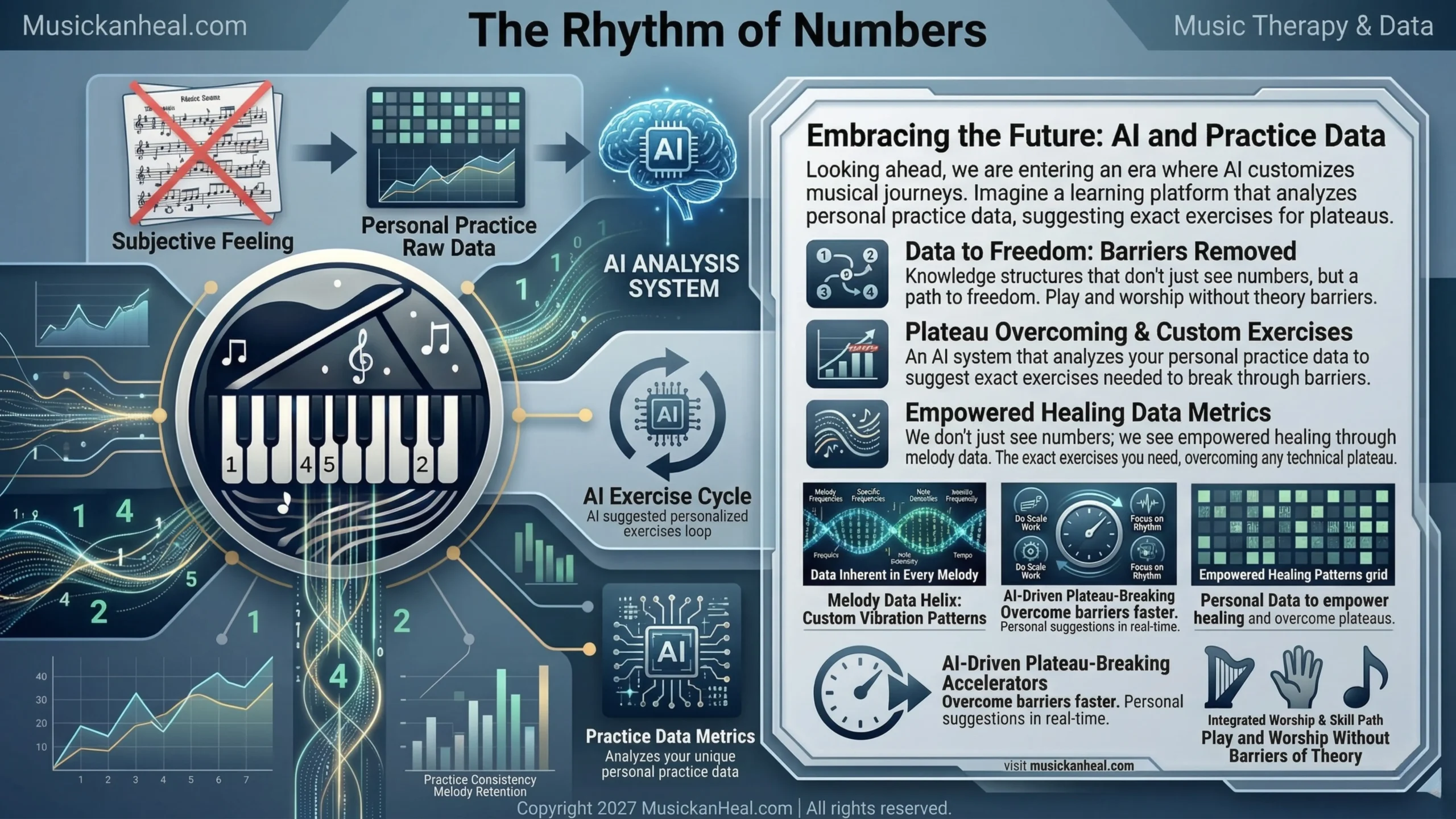
Looking ahead, we are entering an era where AI will customize our musical journeys. Imagine a learning platform that analyzes your personal practice data. Then, it suggests the exact exercises you need to overcome a plateau.
At MusickanHeal, we are committed to staying at the forefront of this evolution. Truly, we don’t just see numbers; we see a path to freedom. Ultimately, by embracing the data inherent in every melody, we empower you to heal. In short, you can play and worship without the barriers of traditional theory.
Start Your Journey Today
Are you ready to experience the power of data in your own musical journey?
Frequently Asked Questions About Musical Data and Learning
How does MusickanHeal use data to simplify piano learning?
Primarily, the platform utilizes the Nashville Number System. This system converts complex musical theory into manageable numerical data. Consequently, students can focus on universal patterns rather than memorizing confusing notation. As a result, you learn to play songs much faster.
Can musical data really improve mental health and wellness?
Yes, definitely. Specifically, modern research shows that certain BPMs and frequencies provide clinical data on stress reduction. By using these structured patterns, the MusickanHeal app helps users regulate their heart rate and cortisol levels. In addition, it turns your practice sessions into a form of active therapy.
Why is a data-driven approach better for piano beginners?
Actually, traditional methods often feel overwhelming and lack clear direction. However, a data-driven roadmap provides you with clear benchmarks. Therefore, you can identify your specific strengths and weaknesses without any guessing. Indeed, it removes the barriers that cause most students to quit.
How does the Nashville Number System turn songs into data?
Specifically, it assigns numbers to each chord in a scale. By doing so, it creates a universal data set for any song. Furthermore, this allows you to transpose and play the same song in any key instantly. In short, you are learning the DNA of the music rather than just memorizing finger placements.
Is the MusickanHeal app available for mobile practice?
Absolutely. For instance, you can download the app on the Apple App Store. In addition, the app tracks your personal practice data. Consequently, it gives you immediate feedback to ensure you are progressing toward your musical and healing goals every day.
All rights are reserved. Copyright 2026 MusicKanHeal | musickanheal.com